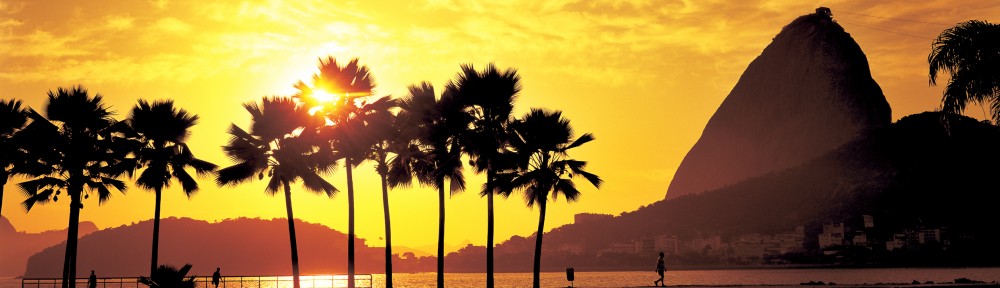
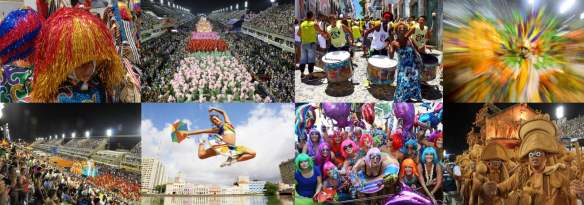
Carnival is an annual celebration that embraces the entire country, even a business centre like São Paulo. The celebrations have far more impact on Brazil and its economy than the Christmas and New Year holidays. Most offices and businesses will close for the week of Carnival.
Carnival is a moveable feast that is tied to the Roman Catholic calendar. Carnival takes place from the Friday prior to Ash Wednesday and continues up to and including Ash Wednesday itself. In some cities and towns the celebrations take over the entire week and the following weekend.
 Rio de Janeiro is the most famous and the largest of Brazil’s carnival celebrations, but there are equally impressive carnival activities in Salvador, Recife and Olinda. In Rio the focus is on samba and the parade of the samba schools organised by the League of Samba Schools on the Sunday and Monday evenings; in Salvador the focus is on the Trio Electricos and the Axé bands that parade through the city; while in Recife and Olinda the driving beat comes from frevo, maracatu and other traditional rhythms. In São Paulo the city also has a very respectable parade of the city’s samba schools.


Wherever you stay in Brazil during carnival, you won’t be far from music and a carnival party. Tickets for most major carnival activities can be reserved in advance through the better tour operators.
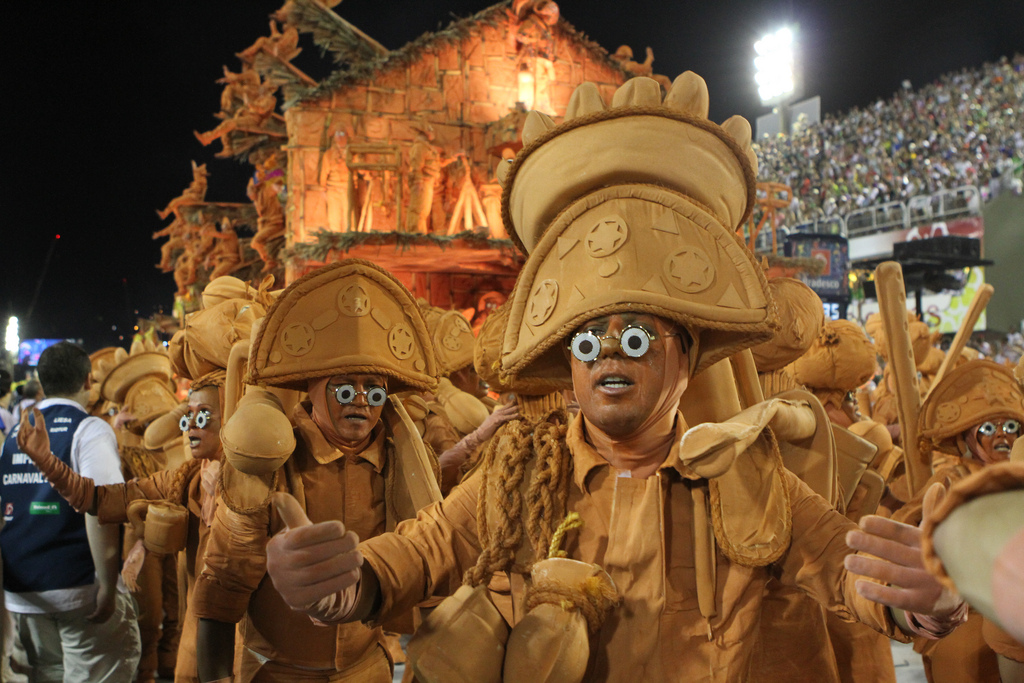
Carnival is just one of the many celebrations and festivities that take place throughout the year in Brazil. Highlights include the Festa do Divino held just before Pentecost Sunday (late May or early June); the June festivals (Festa Junina) linked to the feasts of saints John, Anthony, and Peter; Nossa Senhora de Aparecida, on October 12, which is also a national holiday; October also sees the festival of Círio de Nazaré in the city of Belém, at the mouth of the Amazon. The Amazon also has its own carnival, the Boi Bumba, which takes place over the last weekend in June in Parintins, a town 250 miles (800 km) downstream from Manaus.
 Another major spectacular is seeing in the New Year on Rio’s Copacabana Beach. You will be one of around 3 million people on the beach, the vast majority dressed in white. Hotel beachfront rooms are, not surprisingly, at a premium at this time. While Rio and the rest of Brazil are honouring Iemanjá, the Queen of the Sea, Salvador celebrates the festival of Bom Jesus dos Navegantes.

Up coming dates for Carnival in Brazil (Friday-Wednesday) are:
- 2027: 5-10 February
- 2028: 25 February-1 March
- 2029: 9-14 February
- 2030: 1-6 March
In 2026 the main parades of the Grupo Especial in Rio de Janeiro’s carnival took take place on the nights of Sunday, 15 February; Monday, 16 February; and Tuesday, 17 February. In 2027 the dates will be Sunday, 7 February; Monday, 8 February; and Tuesday, 9 February 2027
This amazing tilt shift video, The City of Samba by Keith Loutit and Jarbas Agnelli will give you a little taste of the Rio carnival parade, even in the rain, and the city itself.
For a full explanation of the Rio carnival parade CLICK HERE
Based on the results of the last five carnival parades (2022-2026) the League of Samba Schools (LIESA) ranks the top scoring samba schools in Rio de Janeiro as:
- Viradouro (77 points)
- Beija-Flor (63)
- Grande Rio (56)
- Imperatriz Leopoldinense (56)
- Vila Isabel (43)
- Salgueiro (34)
- Mangueira (28)
- Portela (26)
- Unidos da Tijuca (10)
- Paraíso do Tuiuti (8)
- Mocidade Independente de Padre Miguel (4)
[Schools score 20 points for a win, 15 for 2nd, 12 for 3rd, 10 for 4th, 8 for 5th, 6 for 6th, 4 for 7th, 3 for 8th, 2 for 9th and 1 for 10th]
33 different samba schools have paraded in the Grupo Especial since 1985, and the first parade on the purpose built Sambódromo. Since 1985, the year LIEASA was also formed, the top ten most successful samba schools have been:
- Beija-Flor (541 points)
- Salgueiro (374)
- Imperatriz Leopoldinense (371)
- Mangueira (345)
- Mocidade Independente de Padre Miguel (281)
- Portela (255)
- Viradouro (251)
- Grande Rio (231)
- Vila Isabel (219)
- Unidos da Tijuca (212)
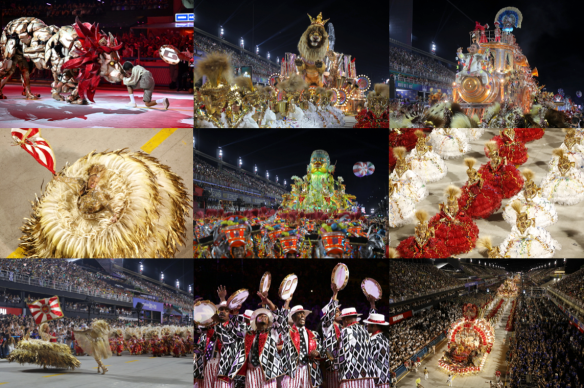
The most recent parades of Grupo Especial – the Premier League of samba – took place in 2026 on the nights of Sunday, 15 February; Monday, 16 February; and Tuesday, 17 February, and the results (out of 270 points) were:
- Viradouro (270 points)
- Beija-Flor (269.9)
- Vila Isabel (269.9)
- Salgueiro (269.7)
- Imperatriz (269.4)
- Mangueira (269.2)
- Unidos da Tijuca (268.7)
- Grande Rio (268.7)
- Paraíso do Tuiuti (268.5)
- Portela (267.9)
- Mocidade (267.4)
- Acadêmicos de Niterói (264.6)

_________________________________________________________________
Copyright © 1984-2026
Christopher Pickard – Brazil the Guide – Critical Divide
All rights reserved – Todos os direitos reservados
criticaldivide.com – braziltheguide.com
 Brazil the Guide