Rio Olympic Torch Relay

Rio Olympic Torch 1Movement, innovation and Brazilian flavour is the inspiration behind the design of the Rio 2016 Olympic torch, which was unveiled on 3 July 2015. Its design aims to reflect the meeting of the Olympic flame with the human warmth of the Brazilian people.

The torch relay convoy is expected to visit 500 Brazilian cities and towns – about 300 of which will host the relay itself while a further 200 will cheer the convoy as it passes by with the flame on display. They include the capitals of all 26 Brazilian states and Brasília. The route has been designed to reach the highest number of people as possible, and Rio 2016 estimates that the torch relay will reach 90 per cent of the Brazilian population.

Rio Olympic Torch 3The journey will begin in May 2016 and will last between 90 and 100 days. There will be about 12,000 torchbearers, each one carrying their torch about 200 meters, then passing the flame – which will have been lit in Greece – on to the next. The torch will travel 20,000 km by road and another 10,000 miles by air over the North and Midwest parts of the country, between the cities of Teresina and Campo Grande, without the flame ever going out.

The torch’s texture has triangles running the length of its body, alluding to the Olympic values of excellence, friendship and respect, and the floating effect of its different segments refers to the efforts of the athletes. One of its main innovations is the movement of these segments, which open up and expand vertically when the Olympic flame is passed from one torchbearer to another. This is known as “the kiss of the torches”.
Upon expanding, the segments reveal the elements that add the Brazilian flavour – diversity, energy and nature – represented by the sea, mountains, sky and sun, and the colours of the Brazilian flag.

Rio Olympic Torch 2 copyCrafted from recycled aluminium and resin with a satin finish, the torch weighs between 1kg and 1.5kg and stands 63.5cm high when closed and 69cm when opened.

The torch relay will start in Brasília and has a definite finish date: 5 August 2016, the day of the Rio 2016 Olympic Games opening ceremony at the Maracanã Stadium in Rio.

The 83 cities that will be the final destination of the Olympic flame at the end of each day are:

1 – Brasília
2 – Anápolis
3 – Goiânia
4 – Caldas Novas
5 – Uberlândia
6 – Patos de Minas
7 – Montes Claros
8 – Curvelo
9 – Governador Valadares
10 – Itabira
11 – Belo Horizonte
12 – Juiz de Fora
13 – Cachoeiro de Itapemirim
14 – Vitória
15 – São Mateus
16 – Porto Seguro
17 – Vitória da Conquista
18 – Ilhéus
19 – Valença
20 – Salvador
21 – Senhor do Bonfim
22 – Petrolina
23 – Paulo Afonso
24 – Aracaju
25 – Maceió
26 – Caruaru
27 – Recife
28 – Campina Grande
29 – João Pessoa
30 – Natal
31 – Mossoró
32 – Fortaleza
33 – Sobral
34 – Parnaíba
35 – Teresina
36 – Imperatriz
37 – Palmas
38 – São Luís
39 – Belém
40 – Macapá
41 – Santarém
42 – Boa Vista
43 – Manaus
44 – Rio Branco
45 – Porto Velho
46 – Cuiabá
47 – Campo Grande
48 – Dourados
49 – Presidente Prudente
50 – Londrina
51 – Cascavel
52 – Foz do Iguaçu
53 – Pato Branco
54 – Passo Fundo
55 – Santa Maria
56 – Pelotas
57 – Porto Alegre
58 – Caxias do Sul
59 – Criciúma
60 – Florianopólis
61 – Blumenau
62 – Joinville
63 – Curitiba
64 – Ponta Grossa
65 – Itapetininga
66 – Bauru
67 – Ribeirão Preto
68 – Franca
69 – Campinas
70 – Osasco
71 – São Bernado
72 – São Paulo
73 – Santos
74 – São José dos Campos
75 – Angra dos Reis
76 – Volta Redonda
77 – Petrópolis
78 – Nova Friburgo
79 – Macaé
80 – Cabo Frio
81 – Niterói
82 – Nova Iguaçu
83 – Rio de Janeiro

2016 Olympic stores open

foto2_rio2016.jpgRio 2016 has opened a gift shop at Terminal 1 of Rio’s International Airport. Open from 6 am until 11 pm the shop sells various Olympic and Paralympic-related merchandise, such as clothes, hats, and beach towels as well as soft-toy versions of the Rio 2016 mascots, Vinicius and Tom.

The Rio Airport shop is the first of a series that will be open at airports: Rio’s Santos Dumont will have a shop soon, as will the airports in São Paulo. Apart from the airport’s new store, there are a number of sites around Rio where official products are already on sale, such as the Tijuca campus of the Estácio de Sá University and the city centre.

You can also access the Rio 2016 Brazilian online store, which has an exclusive range of toys. Prices vary from from caps costing R$49 (US$15) to 45cm soft toys at R$139,90 (US$45).

By 2016, an expected 12,000 products will be available, with the expectation that these items will generate around R$1billion in Brazilian retail sales.

Olympic merchandise will eventually be available at 150 official Rio 2016 stores and at more than 40,000 sales points across Brazil.

TAM moves terminal at London’s Heathrow Airport

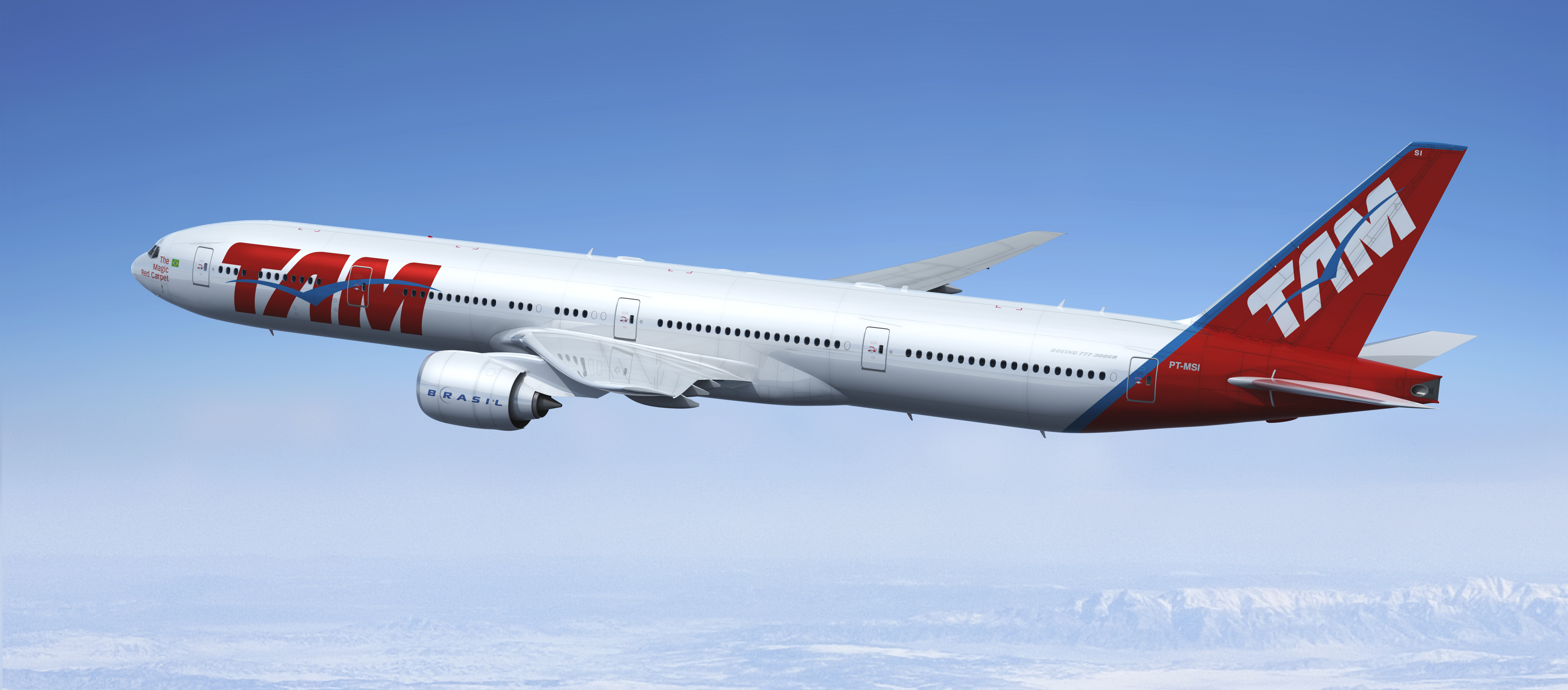
TAM B777 in flightTAM Airlines, Brazil’s major international carrier, moved its operations on 27 May at London’s Heathrow Airport from Terminal 1 to Terminal 3 where it joins a number of other oneWorld partners.

As a member of oneWorld, TAM’s passengers flying in business or with the right card, will be able to use the British Airways’ lounge in the terminal.

TAM currently offers a daily service between London and São Paulo with connecting onward services, while British Airways offers daily services to São Paulo and Rio de Janeiro from London Heathrow’s Terminal 5.

Art for Art’s Sake – The Contemporary Galleries of São Paulo

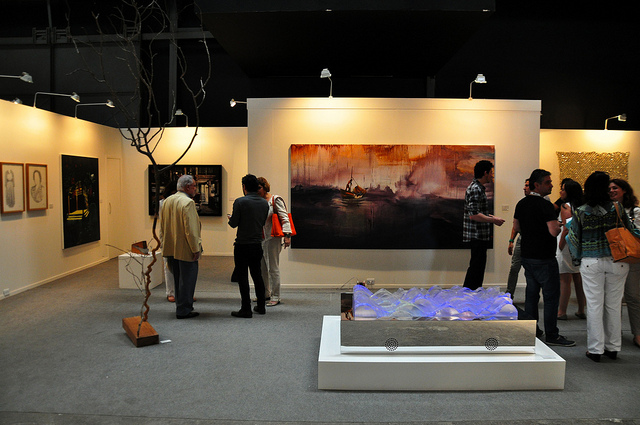
66348498_bigBrazil has a vibrant art world that can also be found and admired in the small commercial galleries found throughout the country.

The art of Brazil is something to be appreciated but above all enjoyed by the visitor. It is art that you may want to buy as a reminder of time spent in Brazil. Leave the Great Masters to the formal galleries of Europe and the US; they are not of the Brazilian spirit.

Commercial art galleries are a Brazilian way of life. You pass one, you enter, you appreciate. If you like something, and have the money, you buy it.

We have asked our good friends at Ronya, one of Brazil’s leading experts in sourcing, acquiring, and maintaining art, to come up with some suggestions of the commercial art galleries in São Paulo and Rio de Janeiro where you can find some of the best and most interesting contemporary and modern Brazilian art and discover new emerging talents.

You can find the Rio list in the Museum & Galleries section of Rio: The Guide.

Ronya’s pick for São Paulo is:

Jardins

Vila Madalena

Pinheiros

Santa Cecília

Itaim

Vila Olímpia

Butantã

Morumbi

Vila Mariana

BA-SP-4

Art for Art’s Sake – The Commercial Galleries of Rio

7982752400_444f0ee098_zTo add a little something extra to the the section of our sister site,  Rio: The Guide, that looks at the city’s museums and galleries, we have asked our good friends at Ronya, one of Brazil’s leading experts in sourcing, acquiring, and maintaining art, to come up with some suggestions of the commercial art galleries in Rio de Janeiro where you can find some of the best and most interesting contemporary and modern Brazilian art and discover new emerging talents.

Just click on the links below to go to the web sites of the respective galleries. And remember, commercial art galleries are a Brazilian way of life. You pass one, you enter, you appreciate. If you like something, and have the money, you buy it. If not, just look and enjoy.

Centro

Botafogo

Copacabana

Ipanema

Leblon

Gávea

Jardim Botânico

Rio Restaurant listings go live on “Rio: The Guide”

Azul Marinho 1The Rio restaurant listings have now gone live on Rio: The Guide, the sister site to Brazil: The Guide, and can be found in the Eating Out section of the site, and also listed by area and type.

There are an estimated 10,000 restaurants in Rio de Janeiro, so we have decided to give you a selection of the best and most interesting in the key areas of town.

We also list what the critics and general public consider to be the best in town.

The site also has a full list of the hotels and hostels on offer in Rio de Janeiro.

New VIP Lounge in Neighbouring Santiago

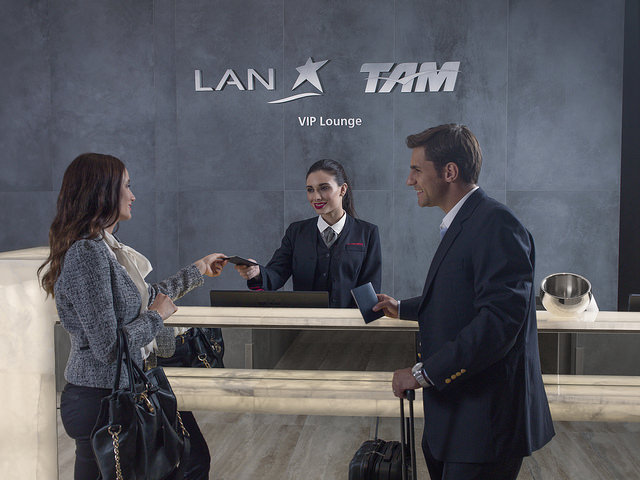
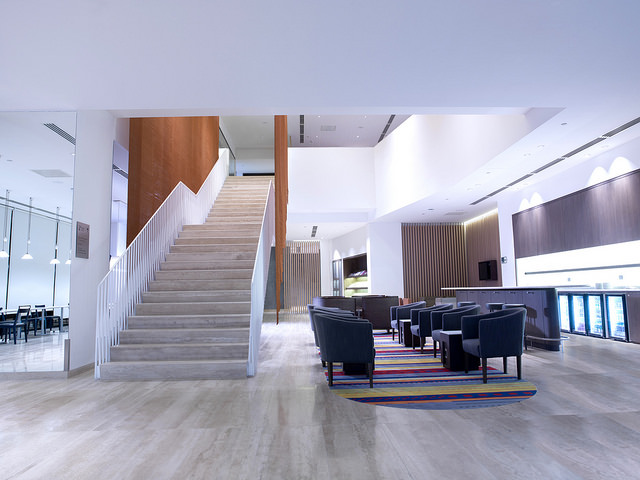
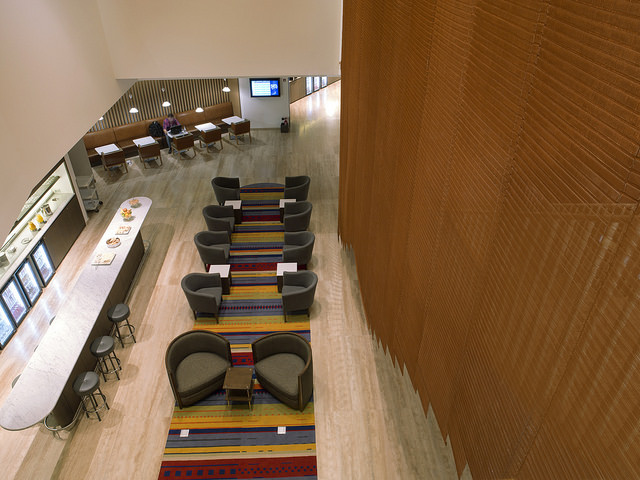
LATAM Santiago 1LAN and TAM Airlines have opened new VIP Lounge in Arturo Merino Benitez International Airport in Santiago, Chile. The new lounge is thought to be the largest in South America , offering a sleeping area, showers and entertainment rooms as well as areas serving food and beverages.

With a design inspired – like the LATAM lounge in São Paulo – by South American culture and natural heritage, the lounge features natural materials, such as marble, onyx and leather, with colours and details that represent the region.

The new lounge is located on the 4th and 5th floors of the western sector of Santiago’s international airport, with direct access from the LAN and TAM check-in area.

LATAM Santiago 4Like the lounge in São Paulo, the new Santiago lounge is available to all clients travelling in Premium Business on LAN, TAM or any oneWorld alliance airline, and those traveling in LAN’s Premium Economy class. Members of the top categories in the LANPASS loyalty program (Black, Comodoro, Premium Silver), TAM Fidelidade (Black, Vermelho Plus, Vermelho) and respective oneWorld categories (Emerald, Sapphire) can also enjoy the lounge space. Members of the LAN and TAM Black, Emerald and Sapphire categories along with oneworld and World Member clients have the right to bring a guest.

LATAM Santiago 2

FIFA confirms football venues for Rio 2016 Olympic Games

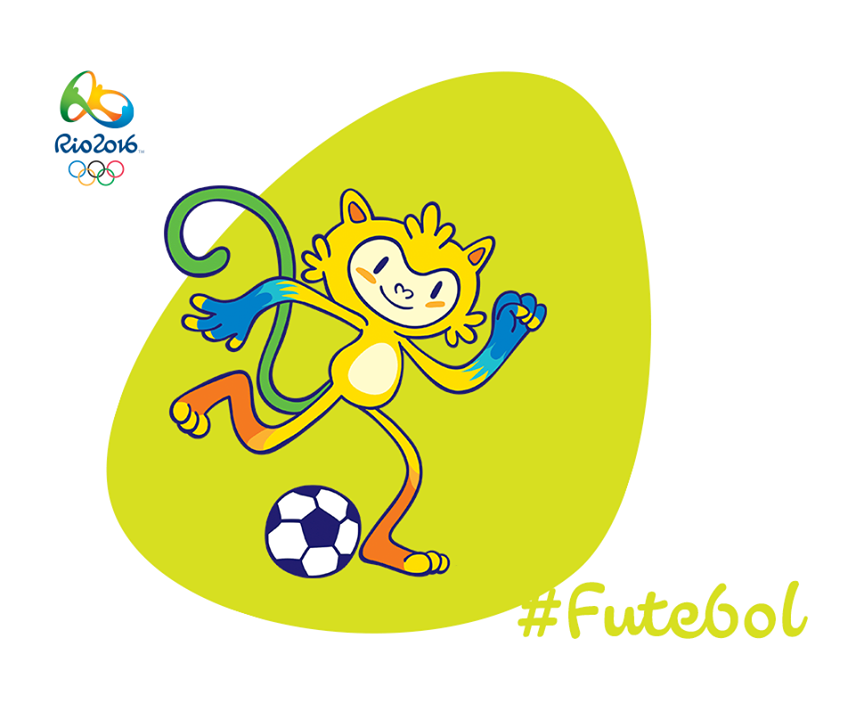
FutebolIt has been confirmed that the Rio 2016 Olympic Games men’s and women’s football tournaments will take place in six cities: Rio de Janeiro, São Paulo, Salvador, Manaus, Brasília and Belo Horizonte. It has also been decided that the 58 matches will be staged at: Corinthians Arena (São Paulo), the Maracanã and Olympic Stadium (Rio de Janiero), Arena Fonte Nova (Salvador), Mané Garrincha Stadium (Brasília), Amazônia Arena (Manaus – photo) and the Mineirão (Belo Horizonte).

“The inclusion of Manaus in the Rio 2016 Olympic schedule will enrich the tournament with a visit of the football players to one of the most iconic locations in the world,” said Rio 2016 President Carlos Nuzman. “I am certain that the Amazon will welcome the Olympic world with a memorable celebration.”

Football is the only sport that will be hosted outside of Rio de Janeiro, with the tournament taking the Rio 2016 Games out to the rest of Brazil. There will be 16 teams in the men’s competition and 12 in the women’s tournament.

Marco Polo Del Nero, chairman of the FIFA Organising Committee for the Olympic Football Tournaments, said: “The Olympic football tournaments will be a fantastic opportunity to revive the great atmosphere seen during the 2014 FIFA World Cup, not only in Rio de Janeiro, but also in the other five cities. They did an excellent job in 2014, and now they can use the World Cup stadiums and infrastructure already in place to unite the country for a major event once more. I am confident that the participating teams will have an unforgettable Olympic experience.”

arenaamazonia_fev2014-1 Two South American teams are already confirmed in the Rio 2016 men’s football competition: Brazil, as host country, and Argentina, as the winners of the South American under-20 championship. In the women’s tournament, Colombia confirmed their place, along with hosts Brazil, by finishing runners-up in last year’s Copa America. All the remaining places will be decided by April 2016.

The men’s Olympic football competition features players up to the age of 23 (born after 31 December 1992), with the exception of three ‘over-age’ players per nation. The16 teams will be divided into four groups of four and the competition will begin on 4 August, one day before the Olympic Games opening ceremony. The two best-performing members of each group will qualify for the quarter-finals. The final will be played on 20 August, a day before the closing ceremony, at the Maracanã Stadium.

In the women’s competition there are no age restrictions. The 12 teams will be split into three groups of four, and matches will start on 3 August. The top two teams in each group and the two best third-placed teams will progress to the quarter-finals. The final will be played on 19 August, also at the Maracanã Stadium.

Rock in Rio 2015 takes shape

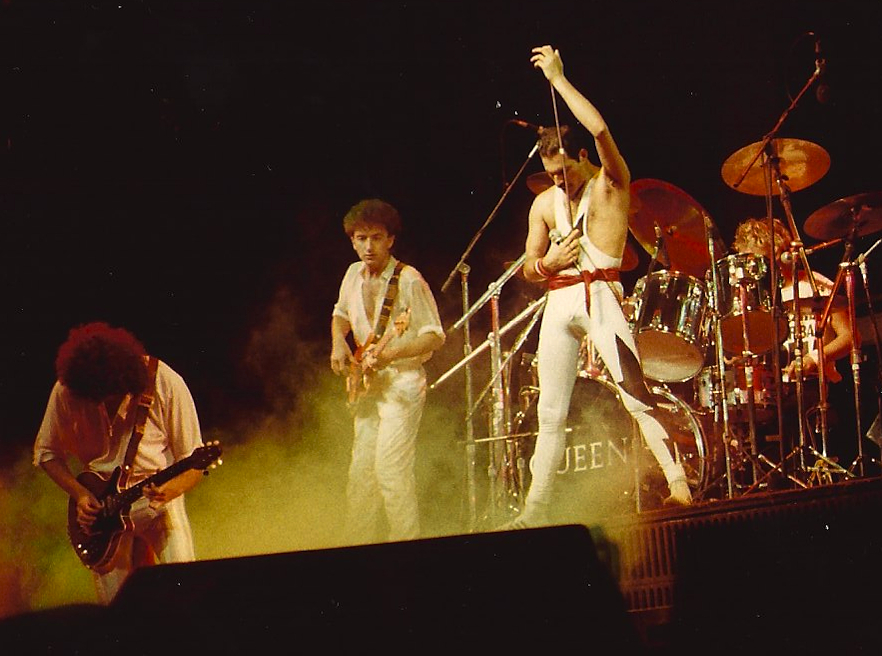
RiR 05-2Queen, the stars of the first ever Rock in Rio in 1985 (photo), and Metallica are the latest acts to be added to the line-up for Rock in Rio 2015. Metallica last played Rock in Rio in 2013.

Queen and Metallica join other acts announced that include Katy Perry, who also performed in 2013, John Legend, A-Ha (that attracted a crowd of 198,000 in 1991 when the festival was staged at the Maracãna), System of a Down, Queens of the Stone Age (who played in 2001), Slipnot (who played in 2011), Faith No More (who played in 1991), and Hollywood Vampires, the new super group made up of Alice Cooper, Johnny Depp and Joe Perry.

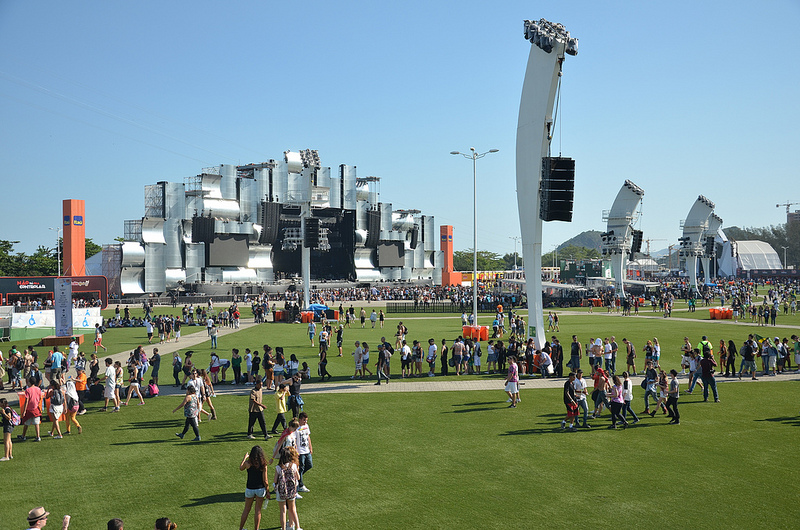
The festival takes place between 18 and 27 September 2015 close to where the Olympic Village is being built. Prior to that, in May, Rock in Rio will be staged for the first time in Las Vegas.

9763191476_fcc7ebde15_c

Happy 450th Birthday Rio!

Rio 450On 1 March 2015 the city of Rio de Janeiro celebrated the 450th anniversary of its founding. The date relates to the first time the Portuguese really made an effort to set up a colony in Rio after driving out the French.

The Portuguese Government had first ordered the Governor General of Brazil, Mem de Sá, then resident in Bahia, to expel the French colony in 1560. His fleet entered the harbour of Rio on 21 February 1560, and in just two days he had taken control of the settlement. His job done, Mem de Sá returned to Bahia but without taking the precaution of establishing his own garrison. With Mem de Sá’s departure, the French returned, this time to set up camp on the mainland close to what is today Catete.

It would not be until 1565 that the Portuguese returned to Rio under the command of the Governor General’s nephew, Estácio de Sá, who landed on 1 March of that year (the date of the 450th anniversary)  just west of Sugar Loaf. A bitter two-year struggle then ensued with the French defeated by the arrival of Mem de Sá himself on 18 January 1567. Two days later, on 20 January, Estácio de Sá was mortally wounded by an Indian arrow while in combat with the French settlers and their native allies. With the death of his nephew, Mem de Sá moved the site of the new town to Morro do Castelo, an area in front of what is today Santos Dumont Airport.

For a full history of Rio de Janeiro CLICK HERE

10993435_901566283200247_3084404311263497163_n