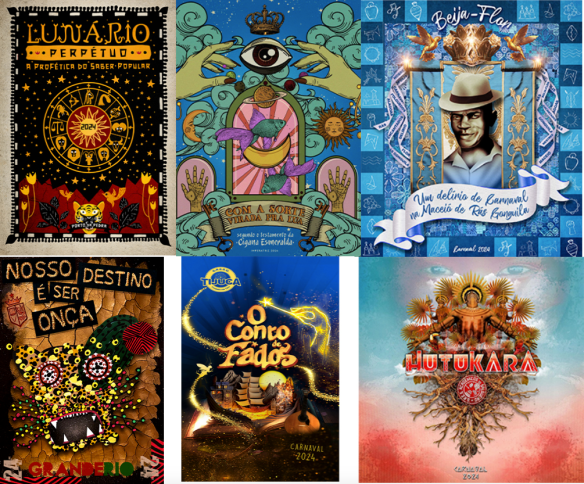
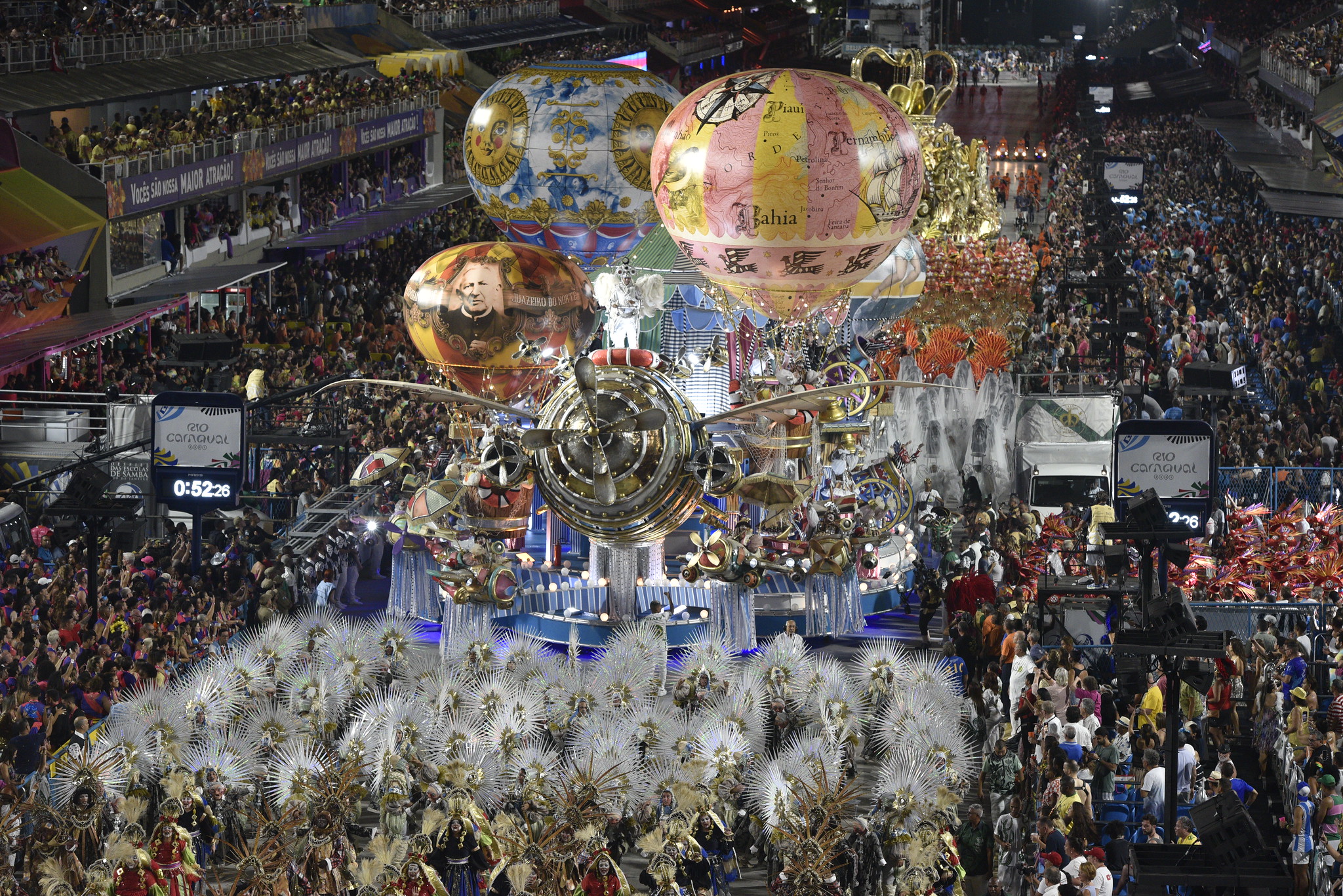
Rio’s Carnival Themes – Enredos – for 2025

SUNDAY, 2 MARCH 2025

Padre Miguel: “Egbé Iyá Nassô” pays homage to the history of the Terreiro da Casa Branca do Engenho Velho, the first Candomblé terreiro (Afro-Brazilian temple) in Brazil, highlighting the resistance of black people and the strength of African women in the struggle for faith and identity.

Imperatriz Leopoldinense: “Ómi Tútú ao Olúfon – Água fresca para o senhor de Ifón”(Ómi Tútu to Olúfon – Fresh Water For the Lord of Ifón’. The story of Oxalá’s desire to visit the kingdom of Xangô, both orishas (divine spirits) and kings within axé culture.

Viradouro: “Malunguinho: O mensageiro de três mundos” (‘Malunguinho: The Messenger of Three Worlds) presents the story of Malunguinho, a hero of the 19th century and the leader of the Catucá Quilombo (a community organised by fugitive slaves) in the north of Pernambuco. The storyline delves into the struggle for freedom and resistance, and the strong dialogue between Afro and indigenous cultures

Mangueira: “À Flor da Terra, no Rio da Negritude entre Dores e Paixões” (At the Flower of the Earth, On the River of Blackness Between Sorrows and Passions) is a narrative that spans time and explores the arrival of the Bantu people at Rio’s Valongo Wharf. It explores the black presence in the centre of Rio, from the influence of the Bantus to the current reality, highlighting the struggles and celebrations of this population.


MONDAY, 3 MARCH 2025

Unidos da Tijuca: “Logun-Edé: Santo Menino Que Velho Respeita” (Logun-Edé: A Saintly Boy Whom Old Men Respect), the story of Logun Edé, the son of Oxum (fresh water) and Oxóssi (the hunter) this orisha, a boy saint that old men respected, carries the essence of youth but the strength of traditions, and is celebrated as a symbol of hope and renewal.

Beija-Flor: “Laíla de todos os santos, Laíla de todos os sambas” (Laíla Of All Saints, Laíla Of All Sambas) recognises and celebrates the work of the school’s carnival director, Laila (Luiz Fernando Ribeiro do Carmo), who died in 2021. It highlights his work in the history of Brazilian carnival along with his invaluable contribution to Beija-Flor’s own story.

Salgueiro: “Salgueiro de Corpo Fechado”, (Closed Body) dives into the rituals used by different cultures throughout history to protect themselves in the search for spiritual protection, including African beliefs, indigenous practices and elements of Rio’s popular culture.

Vila Isabel: “Quanto mais eu rezo, mais assombração aparece” (‘The More I pray, the More Hauntings Appear’) is a walk from childhood to adulthood through the universe of fantastic beings and hauntings that are very strong in Brazilian popular culture. It takes us back to a time when we feared the Bogeyman, the witch and others. 


TUESDAY, 4 MARCH 2025

Mocidade: “Voltando para o futuro, não há limites para sonhar” (Back To the Future – There Are No Limits To Dreaming’,) involves an intergalactic journey that begins with the star of Mocidade, wthe symbol of the school, and the need for the school to shine and return to its former brilliance. At the same time, the school looks at the importance of stars in our lives following on from the Big Bang. 

Paraíso do Tuiuti: “Quem tem medo de Xica Manicongo” (Who’s Afraid of Xica Manicongo?) is the story of the first documented trans woman in Brazil, Xica Manicongo, a striking figure who carried within her the resistance and struggle for identity and freedom. Xica arrived in Brazil enslaved from Africa. Baptised as Francisco, her name and identity did not reflect who she really was. Within the harsh reality of slavery, Xica sought to preserve her religious practices and found refuge with the Tupinambá people in Bahia where she exchanged knowledge and experiences in a context of collective learning and cultural resistance.

Grande Rio: “Pororocas parawaras:  As águas dos meus encantos nas contas dos curimbós” (Pororocas parawaras: The Waters of My Charms in the Beads of the Curimbós’). The parade plunges into the mysterious waters of  the state of Pará and focuses on the enchanted entities that inhabit the pororocas, where the rivers meet the sea. A plot that celebrates the Parawara Pororocas and the cultural riches of the region, marked by unity and tradition.

Portela: “Cantar será buscar o caminho que vai dar no sol – Uma homenagem a Milton Nascimento” (To Sing Is To Seek the Path That Leads To the Sun – A Tribute to Milton Nascimento). Portela honours the great singer-songwriter Milton Nascimento, highlighting his career and contribution to Brazilian music. A tribute that marks the first time that Portela has honoured an artist during their lifetime. The history and importance of Minas Gerais and Brazilian popular art are also a large part of Milton’s story.

Rio Carnival Parade Order in 2025

In 2025 the main parades of the Grupo Especial in Rio de Janeiro’s carnival are scheduled to take place on the nights of Sunday, 2 March; Monday, 3 March; and Tuesday, 4 March. The 12 schools that will parade for the first time over three nights and when are:

Sunday, 2 March 2025

  • Padre Miguel
  • Imperatriz Leopoldinense
  • Viradouro
  • Mangueira

Monday, 3 March 2025

  • Unidos da Tijuca
  • Beija-Flor
  • Salgueiro
  • Vila Isabel

Tuesday, 4 March 2025

  • Mocidade
  • Paraíso do Tuiuti
  • Grande Rio
  • Portela

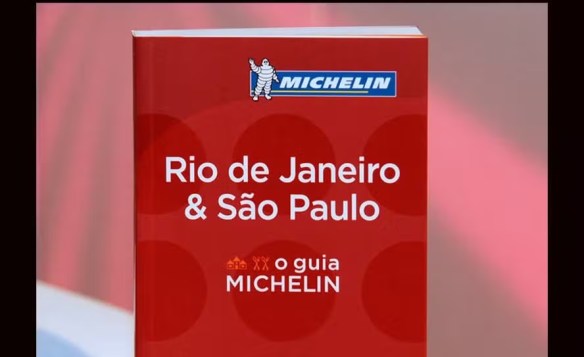
New Digital Michelin Guide for Rio and São Paulo

After a gap of three years, the new digital edition of Brazil’s Michelin Guide was launched on 20 May 2024 at the Copacabana Palace in Rio de Janeiro.

21 restaurants in Rio and São Paulo have been awarded a Michelin star. No restaurant got the top three star rating but two stars went to D.O.M., Evvai and Tuju in São Paulo and Lasai, ORO and Oteque in Rio de Janeiro.

One star restaurants include Fame Osteria, Huto, Jun Sakamoto, Kan Suke, Kazuo, Kinoshita, Kuro, Maní, Murakami, Oizumi Sushi, Picchi and Tangará in São Paulo and Cipriani, Mee and San Omakase in Rio de Janeiro. 

Brazil to Host 2027 FIFA Women’s World Cup

The FIFA Women’s World Cup and 31 teams will be flying down to Rio de Janeiro and nine other Brazilian cities in 2027 to join the Brazilian team after FIFA chose Brazil to host the 10th edition of the Women’s World Cup. The first nation to be handed the rights by an open vote, with member associations voting 119 to 78 in favour of Brazil over a joint bid by Belgium, the Netherlands and Germany.

Brazil has already successfully hosted the men’s World Cup in 1950 and 2014 and are expected to use the Maracanã Stadium (Rio de Janeiro), NeoQuímica Arena (São Paulo), Mineirão (Belo Horizonte), Mané Garrincha (Brasília), Fonte Nova (Salvador), Castelão (Fortaleza), Arena Pernambuco (Recife), Beira-Rio (Porto Alegre), Arena Pantanal (Cuiabá) and the Arena da Amazônia (Manaus) for games.

The exact dates of the tournament are not yet known, but probably June and July of 2027. The tournament will follow the same 32-team format as was used in 2023 in Australia and New Zealand.

Extra Flights Between Brazil and UK

Good news for travel to-and-from Brazil and the UK with British Airways to expand its São Paulo, Guarulhos – London Heathrow operation from 29 October 2024 by three weekly flight from 7 to 10 frequencies.

The new flight is a daytime service from London (11.30-20.20) and overnight back (23.40-14.10 +1). Services to operate Tuesday, Thursday and Saturday.

These flight are in addition to the daily service between Heathrow and GIG Rio de Janeiro, that also connects to Buenos Aires. 

Viradouro is the champion samba school in Rio for 2024

They were the last school to parade on carnival Monday, but Viradouro, the most successful of all the schools over the last five carnivals, is the champion samba school in Rio again, scoring a perfect 270 out of 270. It last won in 2020. 

Viradouro’s winning samba “Arroboboi, Dangbé” looked at the energy of the cult of the powerful serpent god of Voodoo mythology, Vodou, the force that manifested itself in epic battles on the West Coast of Africa and influenced the struggles of the all female Mino warriors of the Kingdom of Dahomey, a dynasty of women chosen by the python spirit, Dangbé.

Second was the champion in 2023, Imperatriz with 269.3, with Grande Rio (269.2), winners in 2022, in third. Making up the top six that parade in the Winners Parade were Salgueiro (269.0), Portela (268.9) and Vila Isabel (268.8). 

And, as so often happens, Porta da Pedra (264.9), that was promoted last year, is relegated this year with a Unidos de Padre Miguel, champion of Série Ouro being promoted to parade in the Grupo Especial in 2025. Padre Miguel have paraded five times in the elite group of schools, the last time in 1972.

The full results of Rio’s Carnival Parade in 2024 for the Grupo Especial were:

1º – Viradouro – 270,0

2º – Imperatriz – 269,3

3º – Grande Rio – 269,2

4º – Salgueiro – 269,0

5º – Portela – 268,9

6º – Vila Isabel – 268,8

7º – Mangueira – 268,8

8º – Beija-Flor – 268,5

9º – Paraíso do Tuiuti – 268,3

10º – Mocidade – 267,2

11º – Unidos da Tijuca – 265,7

12º – Porto da Pedra – 264,9


Carnival 2024: Grupo Especial – Rio’s Top Samba Schools

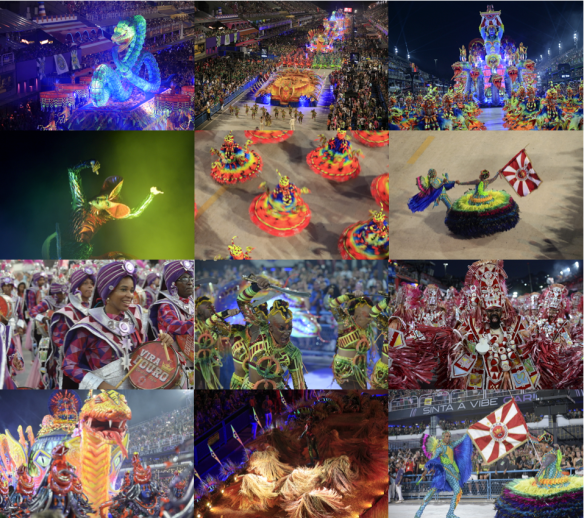
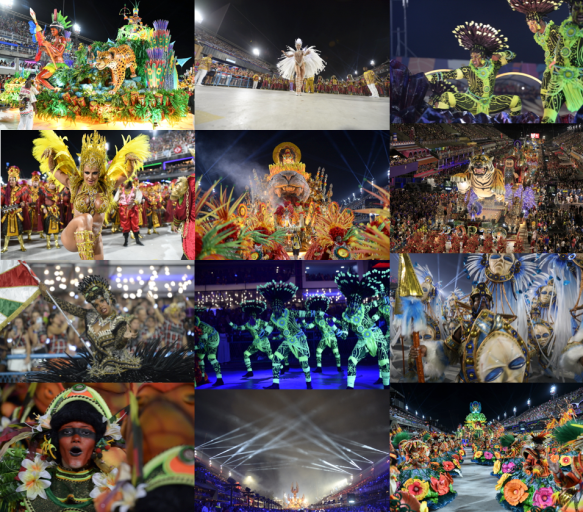
Thanks to the Riotur.Rio team of talented and hard working photographers, a quick and colourful look at the two nights of parades of Rio’s top samba schools, the Grupo Especial, on 11 and 12 February 2024. Dates of the parade of the Grupo Especial in 2025 are 2 and 3 March.


DAY ONE – 11 FEBRUARY 2024

DAY TWO – 12 FEBRUARY 2024

MESTRE-SALAS & PORTA BANDEIRAS (Dance masters and standard-bearers)

Rio’s Carnival parade order in 2024

In 2024 the main parades of the Grupo Especial samba schools during Rio de Janeiro’s carnival are scheduled to take place on the nights of Sunday, 11 February and Monday, 12 February 2024. The 12 schools will parade in the following order:

Sunday, 11 February

  • Porta da Pedra
  • Beija-Flor
  • Salgueiro
  • Grande Rio
  • Unidos da Tijuca
  • Imperatriz Leopoldinense

Monday, 12 February 2024.

  • Mocidade
  • Portela
  • Vila Isabel
  • Mangueira
  • Paraíso do Tuiuti
  • Viradouro

Exame Magazine Picks Brazil’s Top 100 Restaurants.

Exame Magazine has asked a jury of food critics and gourmands to come up with their choice of Brazil’s top 100 restaurants.

São Paulo’s A Casa do Porco came out in top spot with the Rio duo of Lasai and Oteque in 2nd and 3rd and Salvador’s Origem in fourth. Filling out the top five was Maní in São Paulo.

Full list of top 100 covering 12 Brazilian states below and for the original story CLICK HERE

1 A Casa do Porco São Paulo
2 Lasai Rio de Janeiro
3 Oteque Rio de Janeiro
4 Origem Salvador
5 Maní São Paulo
6 Manga Salvador
7 Metzi São Paulo
8 Charco São Paulo
9 Nelita São Paulo
10 Glouton Belo Horizonte
11 Notiê São Paulo
12 D.O.M. São Paulo
12 Fame Osteria São Paulo
14 Taberna Japonesa Quina do Futuro Recife
15 Shihoma Pasta Fresca São Paulo
16 Evvai São Paulo
16 Mocotó São Paulo
18 Cipriani Rio de Janeiro
19 Valle Rustico Garibaldi (RS)
20 Murakami São Paulo
21 Manu Curitiba
22 Cepa São Paulo
23 Ocyá Rio de Janeiro
23 Pacato Belo Horizonte
23 Tanit São Paulo
26 Osso São Paulo
27 Xapuri Belo Horizonte
28 Escama Rio de Janeiro
28 Fasano São Paulo
30 Corrutela São Paulo
31 Cais São Paulo
32 Lilia Rio de Janeiro
33 74 Búzios (RJ)
34 Rocka Búzios (RJ)
35 Jiquitaia São Paulo
35 Mesa do Lado Rio de Janeiro
35 Picchi São Paulo
38 Íz Goiânia
39 Cozinha Tupis Belo Horizonte
39 Igor Curitiba
41 Caxiri Manaus
41 Dona Mariquita Salvador
43 Aizomê São Paulo
43 Barú Marisquería São Paulo
43 Capincho Porto Alegre
46 Sult São Paulo
47 Votre Brasserie São Paulo
48 Preto São Paulo
49 Punk Cuisine Curitiba
50 Makoto San São Paulo
51 Komah São Paulo
52 Grado Rio de Janeiro
53 Kan Suke São Paulo
54 Florestal Belo Horizonte
55 Chez Claude São Paulo/Rio de Janeiro
56 Cora São Paulo
57 Birosca S2 Belo Horizonte
58 Oro Rio de Janeiro
59 Président São Paulo
60 Tragaluz Tiradentes (MG)
61 Jun Sakamoto São Paulo
61 Kuro São Paulo
63 Arturito São Paulo
63 K.sa Curitiba
63 Obst. Curitiba
66 Gero Rio Rio de Janeiro
67 De Segunda São Paulo
68 Banzeiro São Paulo/Manaus
69 Carvão Salvador
70 Sud, o Pássaro Verde Rio de Janeiro
71 Remanso do Peixe Belém
72 Guri Porto Alegre
72 Ostradamus Florianópolis
74 Zoi Fortaleza
75 Xavier Porto Alegre
76 Turi Belo Horizonte
77 Voar Recife
78 São Pedro Recife
79 Osteria Della Colombina Garibaldi (RS)
80 Ristorantino São Paulo
81 Cuia São Paulo
82 Casa do Saulo Santarém (PA)
83 Gajos D’Ouro Rio de Janeiro
83 Nino Cucina São Paulo
85 Borgo Mooca São Paulo
85 Camélia Òdòdó São Paulo
87 Haru Rio de Janeiro
88 Hashi Porto Alegre
89 Babbo Osteria Rio de Janeiro
90 Amado Salvador
90 Arvo Recife
92 Kinoshita São Paulo
93 Tasca da Esquina São Paulo
94 Tangará Jean-Georges São Paulo
95 Modern Mamma Osteria São Paulo
96 Casa de Tereza Salvador
97 Imma São Paulo
98 Donna São Paulo
99 Nōsu São Paulo
100 Preta Salvador