São Paulo’s Best Restaurants and Bars 2025-2026 by Veja São Paulo

The news magazine, Veja São Paulo, publishes an annual list – Comer & Beber (Eat & Drink)  of the best restaurants and bars in São Paulo. For 2025-26 the selection includes a top three of:

Brazilian; A Baianeira (MASP), Notie – Priceless, Dalva e Dito; Contemporary: Evvai, Tuju, D.O.M.; French: Bistrot Parigi, Les Présidents, Chef Rouge; Hamburger: Holy Burger, Z Deli Sandwiches, Coringa do Beco; Italian: Fame Osteria, Picchi, Nelita; Japanese: Goya Zushi, Shin-Zushi, Kuro; Meat: Osso, Veranda Grill, Dinho’s; Mixed Menu: Arturito, Manioca, Chez Claude; Pizza: Soffio Pizzaria, Org Pizzeria, Old Pizzas Artesnais; Trattoria: Elea Forneira, Trattorita Evvai , Shihoma Pasta Fresca; Vegetarian: Carrito Organic, Green Kitchen, Caracolla. And for Bar / Rrestaurant: Aconchegante Bar, Bar dos Cravos, Domo; and Wine Bar: Plou, Sede261, Bardega.

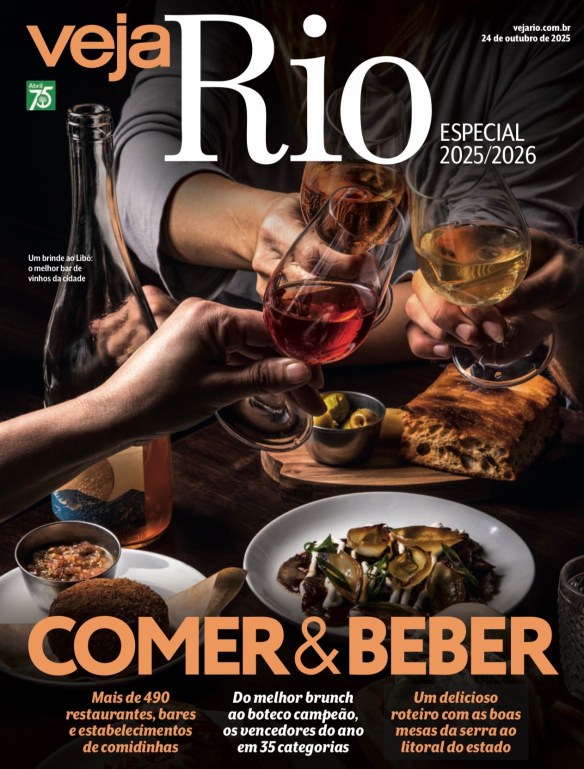
Rio’s Best Restaurants and Bars 2025-2026 by Veja Rio

The news magazine, Veja Rio, publishes an annual list – Comer & Beber (Eat & Drink)  of the best restaurants and bars in Rio de Janeiro. For 2025-26 the selection includes a top three of:

Asian: Elena, Mee, Mr. Lam; Contemporary: Lasai, Oteque, Oseille; Feijoada: Academia da Cachaça, Rubaiyat, Aconchego Carioca; French: Casa 201, Chez Claude Francese Brasserie; Gastrobar: Balcão 201, Nosso, Eleninha; Hamburger: Bal. Clan, Encarnado, T.T. Burger; Italian: Gero, Grado, Nido;  Japanese: San Omakase, Haru, Mitsuba; Meat: Rufino, Malta Beef Club, Giuseppe Grill;  Pizza: Ferro e Farinha, Capricciosa,Ellal; Portuguese: Rancho Portugues, Gajos d’Ouro, EA Gastronomia; Seafood: Satyricon, Polvo Marisqueira, Ocyá; Vegetarian: Teva,.org Bistro, Brota; Wine Bar: Libo, Belisco, Virtuoso; Boteco: Bar da Frente, Capiau; Botica; Kiosk: La na Rosi, Sel d’Ipanema, Ginga.

Rio Carnival Parade Order in 2026

In 2026 the main parades of the Grupo Especial in Rio de Janeiro’s carnival are scheduled to take place on the nights of Sunday, 15 February; Monday, 16 February; and Tuesday, 17 February. After its introduction and success in 2025, the 12 schools will again parade over three nights. The order for the parades was decided on 12 April 2025 and will be:

Sunday, 15 February 2026

  • Acadêmicos de Niterói
  • Imperatriz Leopoldinense
  • Portela
  • Estação Primeira de Mangueira

Monday, 16 February 2026

  • Mocidade Independente de Padre Miguel
  • Beija-Flor de Nilópolis
  • Unidos do Viradouro
  • Unidos da Tijuca

Tuesday, 17 February 2026

  • Paraíso do Tuiuti
  • Unidos de Vila Isabel
  • Acadêmicos do Grande Rio
  • Acadêmicos do Salgueiro

Beija-Flor: Rio Carnival Champions 2025

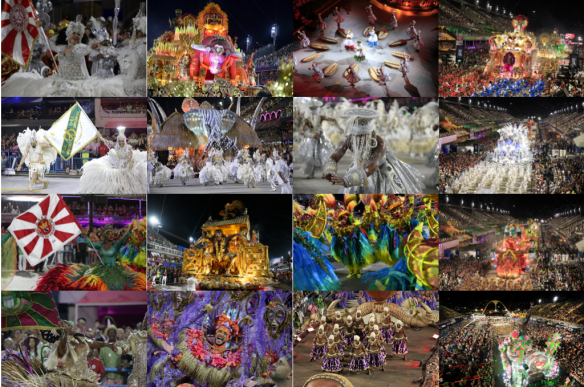
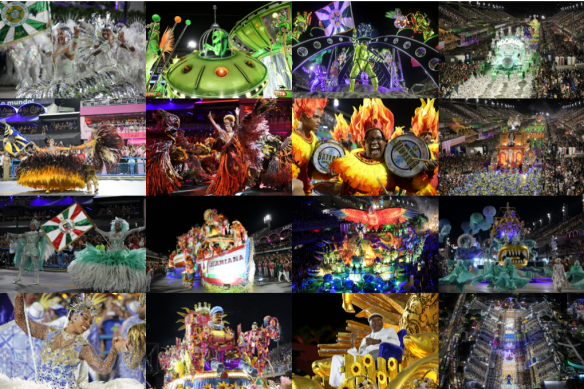
Beija-Flor – caught by the team of RioTur photographers – scored a perfect 270 points to wins its 15th Rio carnival title, and its first since 2018, with the samba ‘Laíla de Todos os Santos, Laíla de todos os sambas’, that celebrated its late carnival director, Luiz Fernando Ribeiro do Carmo, Laíla, who died in June 2021 from complications of Covid-19.

Laíla was responsible for a sequence of the school’s carnival championships between 1998 and 2018, winning in 1998, 2003, 2004, 2005, 2007, 2008, 2011, 2015 and 2018.

Running Beija-Flor close were Grande Rio in second with 269.9 points and Imperatriz, winner of Globo’s Estandarte de Ouro, with 269.8 points. The relegated school is Unidos de Padre Miguel with 266.8 points, that in 2026 will be replaced by Acadêmicos de Niterói, which won Série Ouro and was promoted to the Grupo Especial.

The full results of Grupo Especial in 2025 were:

  1. Beija-Flor (270 points)
  2. Grande Rio (269.9)
  3. Imperatriz (269.8)
  4. Viradouro (269.4)
  5. Portela (269.4)
  6. Mangueira (269.4)
  7. Salgueiro (269.2)
  8. Vila Isabel (269.1)
  9. Unidos da Tijuca (268.8)
  10. Paraíso do Tuiuti (268.7)
  11. Mocidade (267.9)
  12. Unidos de Padre Miguel (266.8)

In 2026 the main parades of the Grupo Especial in Rio de Janeiro’s carnival are scheduled to take place on the nights of Sunday, 15 February; Monday, 16 February; and Tuesday, 17 February. 

Record Numbers for “Rio: The Guide”

The Insider’s Guide to Rio, since 2014 in the form of www.riotheguide.com, continues to inform readers about travelling to-and-visiting Rio de Janeiro and Brazil, with a lot of people using it to learn about Rio’s carnival.

Despite zero support from any tourist board in Brazil, the independent site continues to grow with a record 37,500 views in 2024. The site, as of 10 March, has been viewed 11,000 times so far in 2025, with over 4,000 of these visitors using it to get their information about Rio’s recent carnival.

Thank you for being one of the growing number of readers of Rio: The Guide and Brazil: The Guide

Rio’s Carnival Themes – Enredos – for 2025

SUNDAY, 2 MARCH 2025

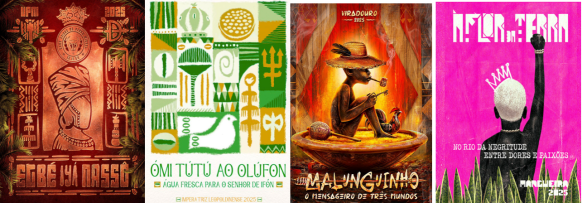
Padre Miguel: “Egbé Iyá Nassô” pays homage to the history of the Terreiro da Casa Branca do Engenho Velho, the first Candomblé terreiro (Afro-Brazilian temple) in Brazil, highlighting the resistance of black people and the strength of African women in the struggle for faith and identity.

Imperatriz Leopoldinense: “Ómi Tútú ao Olúfon – Água fresca para o senhor de Ifón”(Ómi Tútu to Olúfon – Fresh Water For the Lord of Ifón’. The story of Oxalá’s desire to visit the kingdom of Xangô, both orishas (divine spirits) and kings within axé culture.

Viradouro: “Malunguinho: O mensageiro de três mundos” (‘Malunguinho: The Messenger of Three Worlds) presents the story of Malunguinho, a hero of the 19th century and the leader of the Catucá Quilombo (a community organised by fugitive slaves) in the north of Pernambuco. The storyline delves into the struggle for freedom and resistance, and the strong dialogue between Afro and indigenous cultures

Mangueira: “À Flor da Terra, no Rio da Negritude entre Dores e Paixões” (At the Flower of the Earth, On the River of Blackness Between Sorrows and Passions) is a narrative that spans time and explores the arrival of the Bantu people at Rio’s Valongo Wharf. It explores the black presence in the centre of Rio, from the influence of the Bantus to the current reality, highlighting the struggles and celebrations of this population.


MONDAY, 3 MARCH 2025

Unidos da Tijuca: “Logun-Edé: Santo Menino Que Velho Respeita” (Logun-Edé: A Saintly Boy Whom Old Men Respect), the story of Logun Edé, the son of Oxum (fresh water) and Oxóssi (the hunter) this orisha, a boy saint that old men respected, carries the essence of youth but the strength of traditions, and is celebrated as a symbol of hope and renewal.

Beija-Flor: “Laíla de todos os santos, Laíla de todos os sambas” (Laíla Of All Saints, Laíla Of All Sambas) recognises and celebrates the work of the school’s carnival director, Laila (Luiz Fernando Ribeiro do Carmo), who died in 2021. It highlights his work in the history of Brazilian carnival along with his invaluable contribution to Beija-Flor’s own story.

Salgueiro: “Salgueiro de Corpo Fechado”, (Closed Body) dives into the rituals used by different cultures throughout history to protect themselves in the search for spiritual protection, including African beliefs, indigenous practices and elements of Rio’s popular culture.

Vila Isabel: “Quanto mais eu rezo, mais assombração aparece” (‘The More I pray, the More Hauntings Appear’) is a walk from childhood to adulthood through the universe of fantastic beings and hauntings that are very strong in Brazilian popular culture. It takes us back to a time when we feared the Bogeyman, the witch and others. 


TUESDAY, 4 MARCH 2025

Mocidade: “Voltando para o futuro, não há limites para sonhar” (Back To the Future – There Are No Limits To Dreaming’,) involves an intergalactic journey that begins with the star of Mocidade, wthe symbol of the school, and the need for the school to shine and return to its former brilliance. At the same time, the school looks at the importance of stars in our lives following on from the Big Bang. 

Paraíso do Tuiuti: “Quem tem medo de Xica Manicongo” (Who’s Afraid of Xica Manicongo?) is the story of the first documented trans woman in Brazil, Xica Manicongo, a striking figure who carried within her the resistance and struggle for identity and freedom. Xica arrived in Brazil enslaved from Africa. Baptised as Francisco, her name and identity did not reflect who she really was. Within the harsh reality of slavery, Xica sought to preserve her religious practices and found refuge with the Tupinambá people in Bahia where she exchanged knowledge and experiences in a context of collective learning and cultural resistance.

Grande Rio: “Pororocas parawaras:  As águas dos meus encantos nas contas dos curimbós” (Pororocas parawaras: The Waters of My Charms in the Beads of the Curimbós’). The parade plunges into the mysterious waters of  the state of Pará and focuses on the enchanted entities that inhabit the pororocas, where the rivers meet the sea. A plot that celebrates the Parawara Pororocas and the cultural riches of the region, marked by unity and tradition.

Portela: “Cantar será buscar o caminho que vai dar no sol – Uma homenagem a Milton Nascimento” (To Sing Is To Seek the Path That Leads To the Sun – A Tribute to Milton Nascimento). Portela honours the great singer-songwriter Milton Nascimento, highlighting his career and contribution to Brazilian music. A tribute that marks the first time that Portela has honoured an artist during their lifetime. The history and importance of Minas Gerais and Brazilian popular art are also a large part of Milton’s story.

New Digital Michelin Guide for Rio and São Paulo

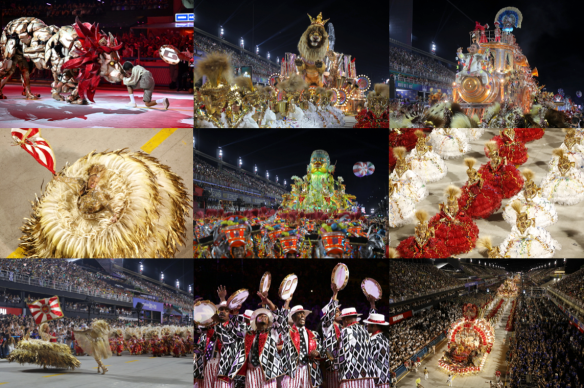
After a gap of three years, the new digital edition of Brazil’s Michelin Guide was launched on 20 May 2024 at the Copacabana Palace in Rio de Janeiro.

21 restaurants in Rio and São Paulo have been awarded a Michelin star. No restaurant got the top three star rating but two stars went to D.O.M., Evvai and Tuju in São Paulo and Lasai, ORO and Oteque in Rio de Janeiro.

One star restaurants include Fame Osteria, Huto, Jun Sakamoto, Kan Suke, Kazuo, Kinoshita, Kuro, Maní, Murakami, Oizumi Sushi, Picchi and Tangará in São Paulo and Cipriani, Mee and San Omakase in Rio de Janeiro. 

Brazil to Host 2027 FIFA Women’s World Cup

The FIFA Women’s World Cup and 31 teams will be flying down to Rio de Janeiro and nine other Brazilian cities in 2027 to join the Brazilian team after FIFA chose Brazil to host the 10th edition of the Women’s World Cup. The first nation to be handed the rights by an open vote, with member associations voting 119 to 78 in favour of Brazil over a joint bid by Belgium, the Netherlands and Germany.

Brazil has already successfully hosted the men’s World Cup in 1950 and 2014 and are expected to use the Maracanã Stadium (Rio de Janeiro), NeoQuímica Arena (São Paulo), Mineirão (Belo Horizonte), Mané Garrincha (Brasília), Fonte Nova (Salvador), Castelão (Fortaleza), Arena Pernambuco (Recife), Beira-Rio (Porto Alegre), Arena Pantanal (Cuiabá) and the Arena da Amazônia (Manaus) for games.

The exact dates of the tournament are not yet known, but probably June and July of 2027. The tournament will follow the same 32-team format as was used in 2023 in Australia and New Zealand.

Extra Flights Between Brazil and UK

Good news for travel to-and-from Brazil and the UK with British Airways to expand its São Paulo, Guarulhos – London Heathrow operation from 29 October 2024 by three weekly flight from 7 to 10 frequencies.

The new flight is a daytime service from London (11.30-20.20) and overnight back (23.40-14.10 +1). Services to operate Tuesday, Thursday and Saturday.

These flight are in addition to the daily service between Heathrow and GIG Rio de Janeiro, that also connects to Buenos Aires.