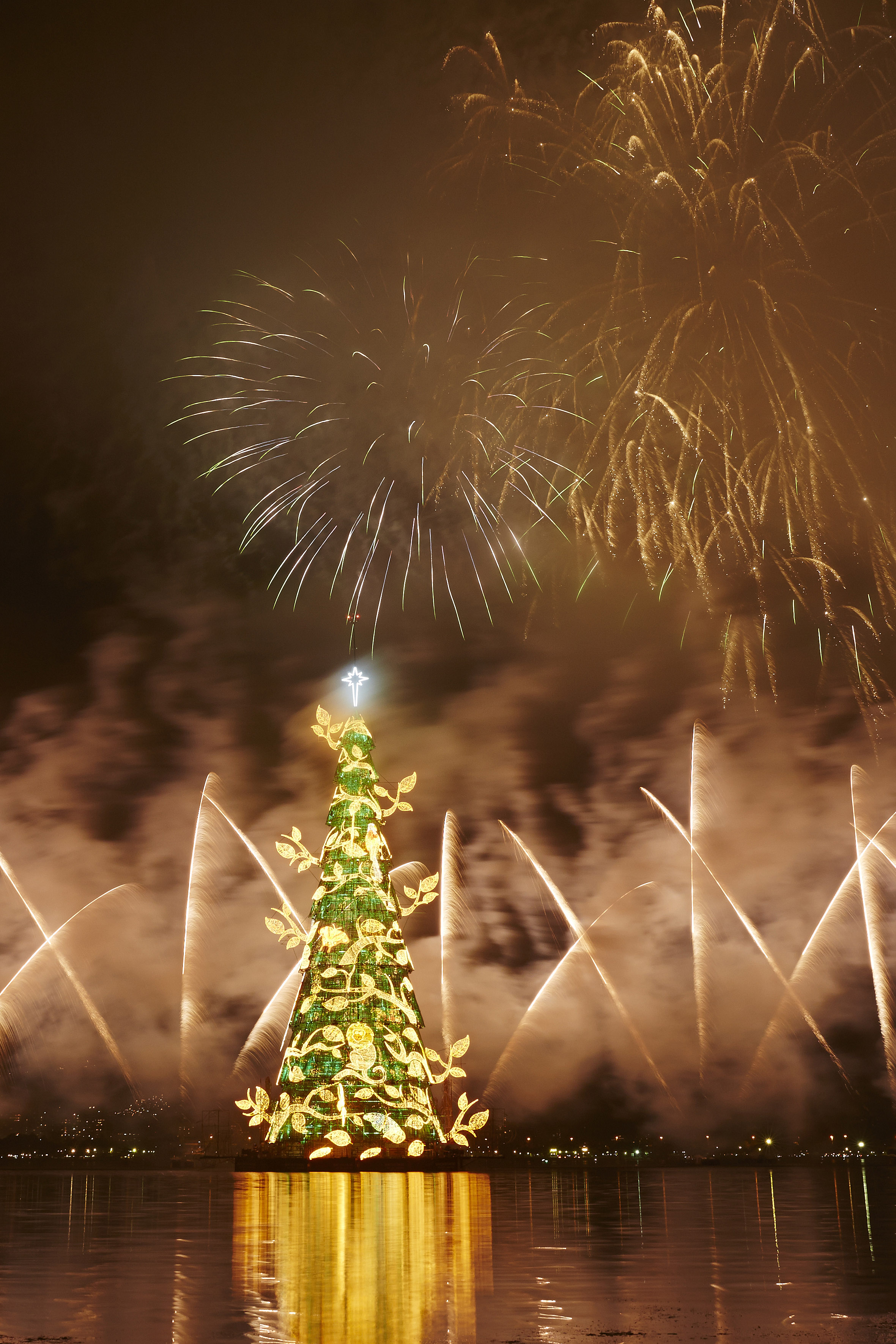
 A special year lies ahead for Brazil. From all the team at Braziltheguide.com we wish you a very happy holiday season and a healthy, prosperous and memorable year to come.
Feliz Natal, um próspero Ano Novo e muitas felicidades em 2014.
A special year lies ahead for Brazil. From all the team at Braziltheguide.com we wish you a very happy holiday season and a healthy, prosperous and memorable year to come.
Feliz Natal, um próspero Ano Novo e muitas felicidades em 2014.
Formula One racing’s governing body, the FIA, has published a revised calendar for the 2014 world championship following a meeting of its World Motor Sport Council in Paris.
The season will kick off in Australia on 16 March and conclude in Abu Dhabi on 23 November. The two new races – in Austria and Russia – will be held on June 22 and October 12 respectively.
The Brazilian Grand Prix in São Paulo, that had been scheduled to close the season on 30 November, will now take place on 9 November and be the second last of the season.
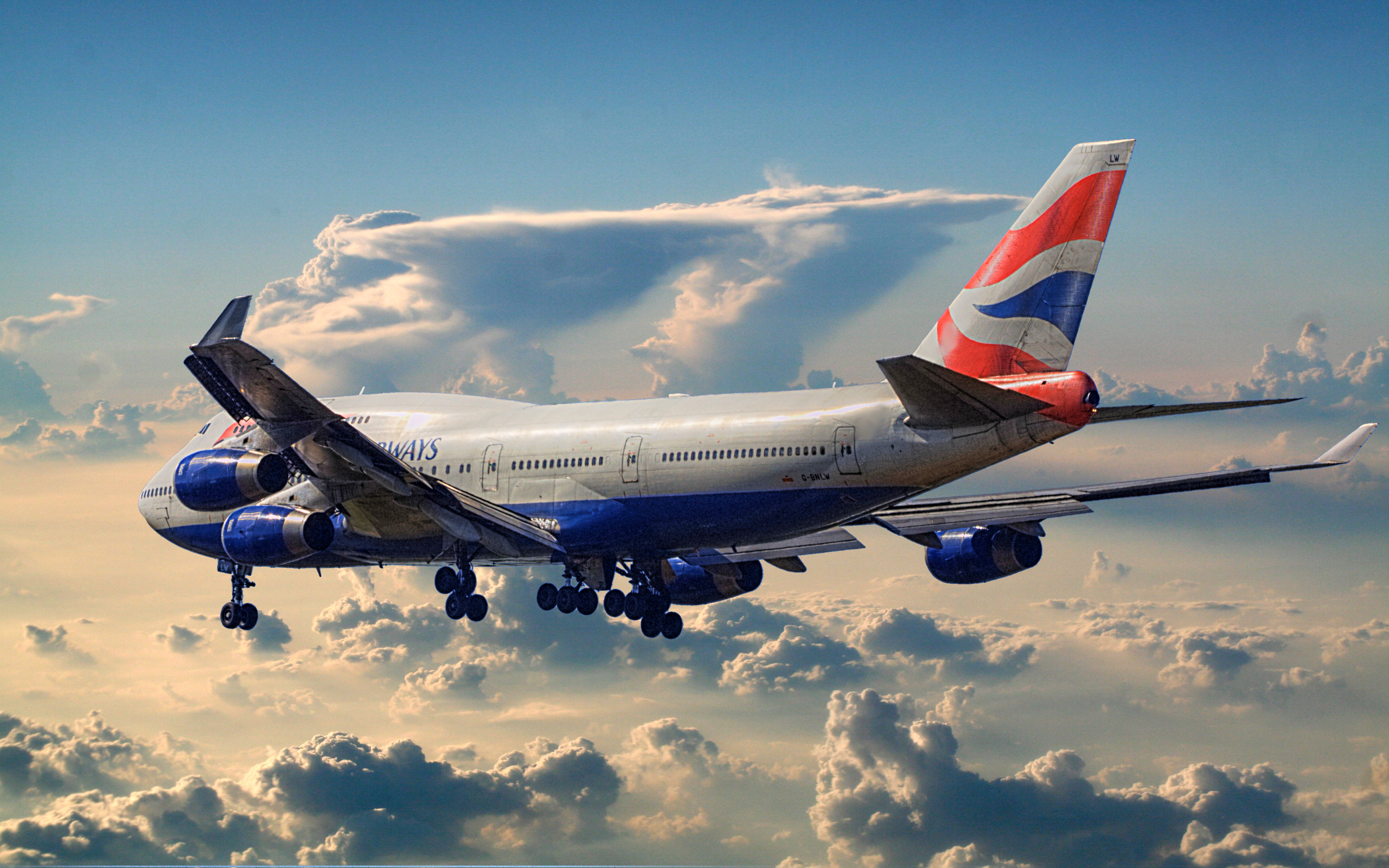 British Airways is to increase its direct weekly services to-and-from London’s Heathrow Airport and São Paulo on 1 June 2014 from seven to ten using 747-400s (photo). British Airways also offers a daily service between London and Rio de Janeiro.
The other airline offering direct non-stop service between London and São Paulo and Rio de Janeiro is TAM Airlines from Brazil.
As of 1 April 2014 both airlines will be members of oneWorld.
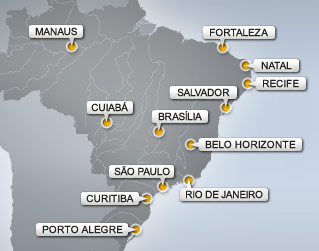
At the group stage of the World Cup fans of teams will have to cover the following distances to watch their team play. Fans of the USA have the furthest to travel, 5607 km, while the fans of Belgium have the least far to travel between games, 698 km.
 GROUP A
GROUP B
GROUP C
GROUP D
GROUP E
GROUP F
GROUP G
GROUP H
 Nike has unveiled the new Brazil National Team home kit at an event in Rio de Janeiro on 24 November. The kit, which will be worn during the World Cup, combines performance innovation, cultural design cues and environmentally sustainable materials. Nike will be the kit supplier to 10 of the 32 tournament finalists. Adidas & Puma each have deals with eight teams.
“Creating this kit is one of the greatest honors we have at Nike,” says Trevor Edwards, President of the Nike Brand. “It’s more than just a player’s uniform, it represents the history of Brazilian football, the five stars, the romance of the game, and the hopes of a nation.”
The kit, Nike explains, aids performance by regulating player body temperature and keeping players cool. The Dri-FIT technology pulls moisture away from the skin to the outside of the garment where it evaporates more quickly, and laser-cut holes and engineered mesh in key areas where heat is generated allow for increased breathability and airflow.
In line with Nike’s commitment to superior performance with lower environmental impact, the shirt, shorts and – for the first time in a national team kit – the socks, all feature fabric made from recycled plastic bottles. Each kit is made using an average of 18 recycled plastic bottles. Since 2010, Nike has diverted almost 2 billion bottles from landfills, enough to cover over 2800 full-sized football pitches.
Designers utilized three-dimensional body scans of the entire Brazilian National Team to create an updated fit, improving comfort and allowing the body to move naturally within the kit.
 “The Brazilian home kit is like a national flag; it symbolizes the country and its people,” says Martin Lotti, Creative Director of Nike Football. “We wanted to create a fusion of the high speed brilliance of football and the culture of Brasil while staying true to what the home kit represents.”
The jersey features a new Y-neck design. The shorts are a classic Brazilian Varsity Royal with a white stripe. Simple and iconic, the fit is slimmer and more tailored to the body, with a cut specifically designed to aid movement and comfort.
The Brazilian crest has been updated and made slightly larger, with a gold colored metallic weave added to the crest for a shimmering effect. Behind the crest, on the inside of the jersey, is the slogan “Nascido para jogar futebol” (“Born to Play Football”).
Nike also worked with Brazilian designer Bruno Big to deliver a mark of pride at the inner back neck of each jersey – a small yellow canary motif representing “Canarinho”, the nickname given to the team when they wear the yellow home jersey.
“To wear the ‘amarelinha’ is an honor for me and my teammates,” says Brazil star Neymar. “Brazil is a very special place to play football, and we want to play hard and win for our country. This kit helps us to do that with both the technology and the inspiration it provides.”
Even the name and numbers on each kit have also been carefully designed with a micro fine pinhole for moisture management and cooling. The style of the name and number is inspired by the classic fonts widely used on Brazilian hand printed street posters. All jerseys worn by players and sold in Brazil are made in Brazil.
The Brazil kit is available in Nike stores from 5 December 2013.
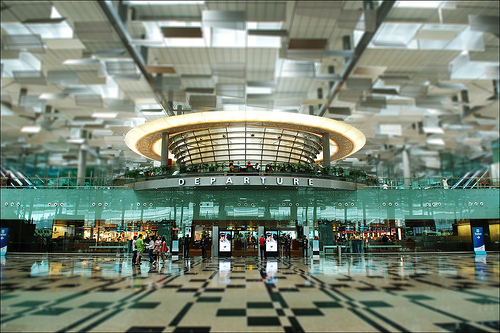 Good news for travellers heading for Rio de Janeiro. The city’s main international airport, Aeroporto Internacional Tom Jobim (Galeão) has been bought by the company that operates the award winning Singapore Changi Airport (photo), in partnership with the Brazilian construction company Odebrecht. The concession is for 25 years, and the new group promises some quick fixes for the aging airport before a major investment in improving facilities at the airport.
The company responsible for operating Zurich and Munich airports, in partnership with Brazil’s CCR, has bought Belo Horizonte’s Confins airport, which brings to a total of five the major Brazilian airports privatised by the government. The other three being Guarulhos and Viracopos in São Paulo, and Brasília.
The 32 teams to qualify to play in Brazil between 12 June and 13 July 2014 for the 2014 FIFA World Cup are from:
EUROPE: Belgium, Bosnia Herzegovina, Croatia, England, France, Germany, Greece, Italy, Netherlands, Portugal, Russia, Spain, Switzerland
SOUTH AMERICA: Argentina, Brazil, Chile, Colombia, Ecuador, Uruguay
NORTH & CENTRAL AMERICA: Costa Rica, Honduras, Mexico, United States
AFRICA: Algeria, Cameroon, Ghana, Ivory Coast, Nigeria
ASIA: Australia, Iran, Japan, South Korea
 For the draw on 6 December 2013 the 32 teams will be split into four pots. Pot one will have the seven highest ranked teams in the world plus the host, Brazil. The other pots are based on regions with France, as the lowest-ranked European qualifier, in a separate pot (3) and drawn with a South American seed
The likely pots are:
Seeds (Pot 1): Brazil, Spain, Germany, Argentina, Colombia, Belgium, Switzerland, Uruguay.
Pot 2: Japan, Australia, Iran, South Korea, Costa Rica, United States, Mexico, Honduras.
Pot 3: France, Chile, Ecuador, Nigeria, Cameroon, Ivory Coast, Algeria, Ghana.
Pot 4: Netherlands, Italy, England, Portugal, Greece, Bosnia & Herzegovina, Croatia, Russia.
Unless something out of the ordinary happens in the final play off game, the 32 teams that will have qualified for the 2014 FIFA World Cup in Brazil will be (* seeded teams): Algeria / Argentina * / Australia / Belgium * / Bosnia-Herzegovina / Brazil * / Cameroon / Chile / Colombia * / Costa Rica / Croatia / Ecuador / England / France / Germany * / Ghana / Greece / Honduras / Iran / Italy / Ivory Coast / Japan / Mexico / Netherlands / Nigeria / Portugal / Russia / Spain * / Switzerland * / South Korea / Uruguay * / USA.
A very tasty selection of teams to cheer on, and a great selection for Brazil in terms of tourism. However, it is not going to make it easy or cheap to get to Brazil for the tournament, especially from Europe as all the leading European airlines now have their countries represented in Brazil. That is England (British Airways), France (Air France), Germany (Lufthansa), Italy (Alitalia), Netherlands (KLM), Portugal (TAP), Spain (Iberia and Air Europa) and Switzerland (Swiss).
To keep fully up to date on travelling to Brazil for the World Cup follow our sister site: www.worldcuptheguide.com

The organizers of the 2016 Olympic and Paralympic games have released the sporting pictograms that will be used during the games.
They are:


 Seven leading travel trade executives have been given the task of running the new Brazilian tourist offices across Europe. Between them their markets represent nearly 30% of all the tourists who visit Brazil, but these are the tourists that stay longer and spend more.
They are:
France – Mariana Sarciotto Catunda Martins
Germany– Karin Luize de Carvalho
Italy – Maise Patelli
Netherlands– Fábio Barbosa Pimentel
Portugal – Rodrigo Godinho
Spain – Rosiane Rockenbach
United Kingdom – Lilás Nascimento
 Brazil the Guide