South America has wrapped up the first four rounds of qualifying (out of 18) for the FIFA World Cup in Qatar in 2022.
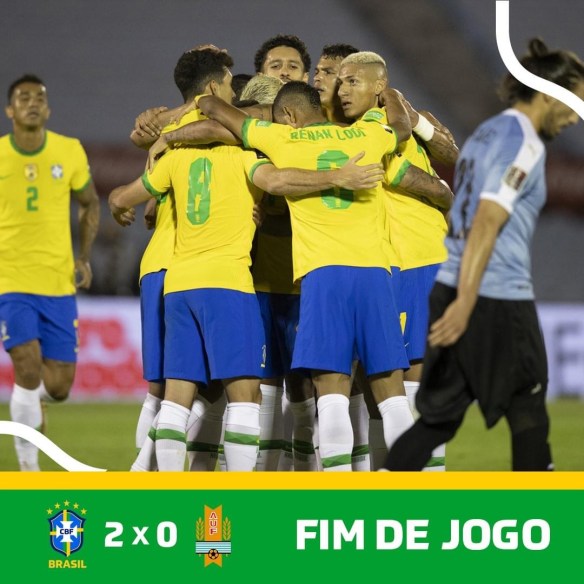
Ten teams are playing for four automatic places and a fifth play-off spot. Brazil has 100% record so far, beating Uruguay 2-0 in Montevideo on 17 November. Argentina is also unbeaten, winning 2-0 over Peru. Ecuador beat Colombia 6-1 and Venezuela surprised Chile 2-1. In the fifth game, Paraguay and Bolivia drew 2-2.
Next matches are March 2021 and will see two South American classics with Argentina playing Uruguay in Buenos Aires on 25 March and Brazil in Rio on 30 March.
The Mayor of São Paulo, supported by the Governor of the State, has signed a new five year contract, with a possible five year extension, to continue to host a Formula One Grand Prix in the city.
The race is now to be called the São Paulo Grand Prix, rather than the Brazilian Grand Prix, presumably to leave the door open for Rio de Janeiro to build a new circuit to host a Brazilian Grand Prix.
The 2020 Brazilian GP, scheduled originally for 15 November 2020, was cancelled like many races due to Covid-19, but São Paulo is provisionally, at least until the ink dries, on the 2021 schedule to host a race on Sunday, 14 November 2021.
The decision should be popular with the Formula 1 teams given the size of the Brazilian market for many of the sponsors.
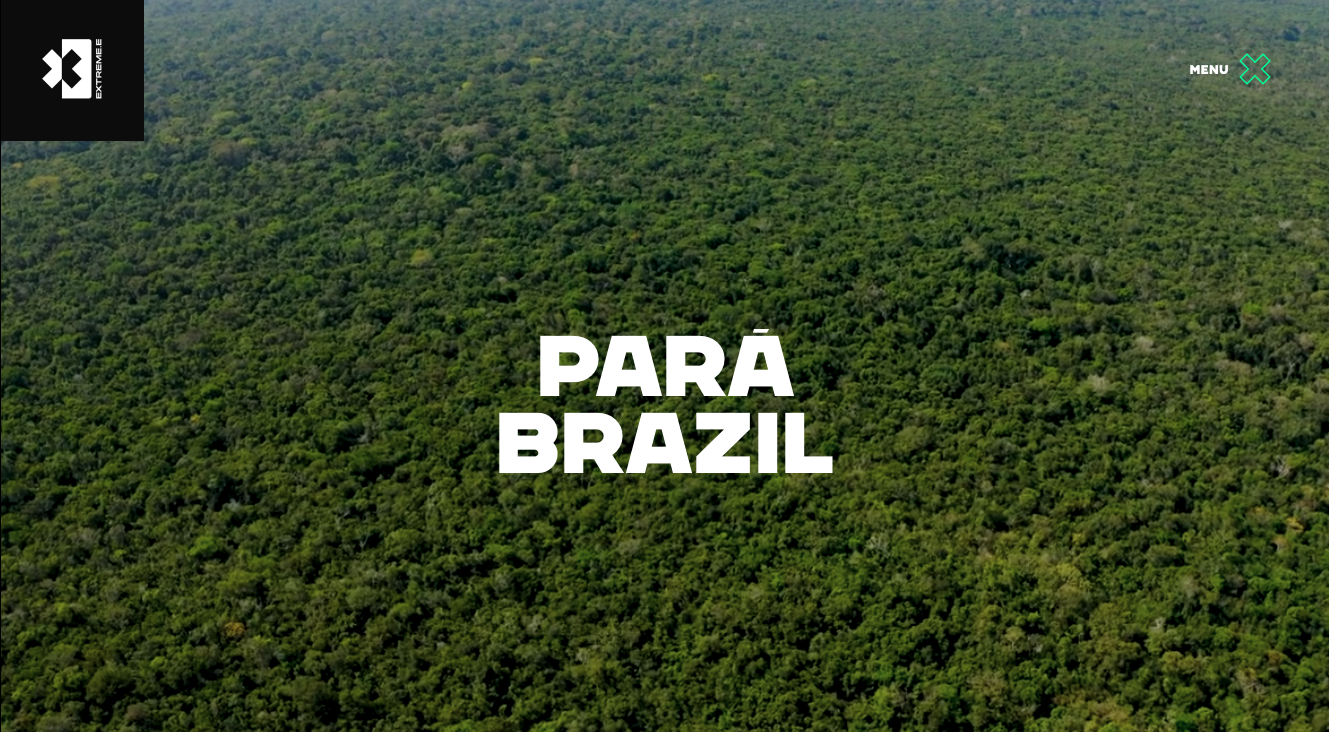
The new Extreme E series is heading to Brazil in 2021 with one of the series five races, the Amazon Prix, scheduled for a damaged region close to Santarem in the state of Para.
The fourth race in the series is scheduled to take place from 23 to 24 October 2021 with the Glacier Prix wrapping up the season in Terra del Fuego, Argentina from 11 to 12 December. The series will bring electric racing to some of the most remote corners of the planet to highlight the climate change challenges faced by different ecosystems, whilst showcasing the performance of all-electric SUVs in extreme conditions.
Extreme E has pledged to work with The Nature Conservancy (TNC), which has more than 24 years of conservation experience across the Amazon and a deep understanding of the major drivers of deforestation in the region. The project has been selected by Francisco Oliveria PhD – Extreme E’s Amazon Scientist and a leading Brazilian conservation expert with more than 20 years’ experience working on Amazon issues for the Brazilian government, WWF and at the University of Cambridge.
For more information about the Extreme E series click here
The votes have been counted, at least at the 44th Mostra Internacional de Cinema de São Paulo, where the official jury chose Arie Esiri and Chuko Esiri’s richly woven tale of city life “Eyimofe” (This Is My Desire) from Nigeria as the best feature (fiction), and Davy Rothbart’s “17 Blocks”, from the US, as best documentary.
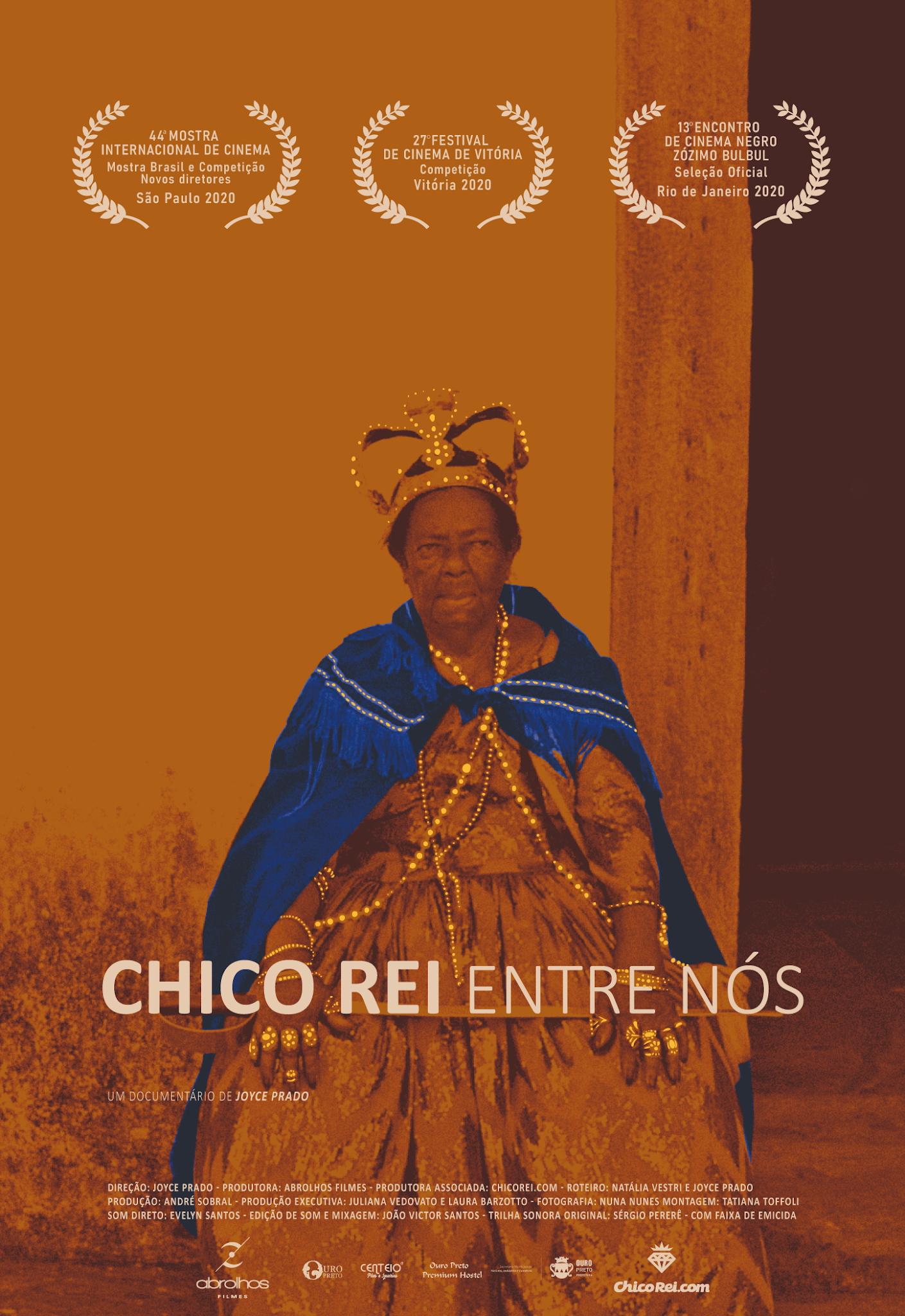
The popular vote went for Mohammad Rasoulof’s Sheytan “Vojud Nadarad” (There Is No Evil), the German / Iranian production that won the Golden Bear at this year’s Berlin Film Festival, as best international feature (fiction), and David France’s “Welcome to Chechnya“, from the US, as best documentary. The public also chose Cássio Pereira dos Santos’ “Valentina” as best Brazilian feature (fiction), and Joyce Prado’s “Chico Rei Entre Nós” as best Brazilian documentary, a film that also received a special mention from the official jury. Congratulations to all. The virtual festival managed to screen a total of 199 films.
Kleber Mendonça Filho and Juliano Dornelles’ “Bacurau”, that premiered in Cannes in 2019, won best fiction film, direction, original screenplay, special effects and actor (Silverio Pereira) at the 2020 Grande Premio do Cinema Brasileiro. “A vida invisível” (“The Invisible Life”) by Karim Ainouz was another multiple winner picking up the awards for adapted screenplay, art direction, costumes, cinematography and supporting actress (Fernanda Montenegro).
“Cine Holliúdy 2 – A chibata sideral”, by Halder Gomes, was chosen best comedy, and also won supporting actor for Chico Diaz, while best documentary went to Marcelo Gomes’ “I’m Saving Myself For When the Carnival Arrives” (“Estou me guardando para quando o carnaval chegar”). Best Animated Feature was “Tito e os Pássaros” by Gustavo Steinberg, Gabriel Bitar and André Catoto and Best Children’s Feature Film was Daniel Rezende’s “Turma da Mônica – Laços”.
Sharing the actor prize with Silverio Pereira (“Bacurau”) was Fabrício Boliveira for his performance in“Simonal”, a film that also won the first time directing award for Leonardo Domingues as well as sound and soundtrack awards. Best actress went to Andrea Beltrão for “Hebe Camargo – The Star of Brazil”.
The Audience award went to Pedro Amorim’s “Eu sou mais eu” and best foreign film was Oscar winner “Parasite” (South Korea) by Bong-Joon-Ho.
Full list of winners at the 2020 Grande Premio do Cinema Brasileiro
Fiction Feature Film: “Bacurau”
Direction: Kleber Mendonça Filho and Juliano Dornelles, “Bacurau”
Direction – First Feature: Leonardo Domingues, “Simonal”
Actress: Andrea Beltrão, “Hebe Camargo – The Star of Brazil”
Actor: Silverio Pereira, “Bacurau”, and Fabrício Boliveira, “Simonal”
Supporting Actress: Fernanda Montenegro, “The Invisible Life” (“A vida invisível”)
Michelin has announced the restaurants in Rio and São Paulo to be awarded the prestigious Michelin Star for 2020. With two stars are Oro and Oteque in Rio de Janeiro and D.O.M. and Ryo Gastronomia in São Paulo. One Star was awarded to Cipriani, Lasai and Mee in Rio; and Evvai, Huto, Jun Sakamoto, Kan Suke, Kinoshita, Maní and Picchi in São Paulo.
In “Michelin 2020 Bib Gourmand,” the category that recognises more informal restaurants with good quality and good value cooking, six restaurants in Rio de Janeiro are listed in the 2020 Michelin Guide (Artigiano, Didier, Miam Miam, Lilia, Pici Trattoria, and Maria e o Boi) and 33 in São Paulo (AE! Cozinha, Ama.zo, Arturito, Baianeira, Balaio IMS, Banzeiro, Barú Marisquería, Le Bife, Bio, Bistrot de Paris, Brasserie Victória, Casa do Porco, Casa Santo Antônio, Cepa, Charco, Corrutela, Ecully – Perdizes, Fitó, Kith 2º Andar, Komah, Manioca, Mimo, Mocotó, Nit, Petí Gastronomia, Petí Americana, Piccolo, Più, Più Iguatemi, Tanit, TonTon, Tordesilhas, and Zena Caffè).
According to Michelin 85%, as of 20 September 2020 of Michelin Starred restaurants worldwide at 35 destinations are currently open for dining either inside or outside. In Brazil 72% of the Michelin Starred restaurants are now open, but in the US just 14% of Starred restaurants are welcoming guests again. In Europe, Belgium has 95% of its Michelin Starred restaurants back open; in Spain and Portugal, the percentages have risen to 86% and 93% respectively; while the UK it is at 73%.
110 years ago, between 22 August and mid-September 1910, Corinthian-Casuals Football Club made its first tour of Brazil, and on 1 September 1910, Sport Club Corinthians Paulista, now one of Brazil’s most famous and successful football clubs, was born based on an admiration of some Paulistas for the elegant play of the Corinthians.
It was on 24 August 1910 that Corinthian Casuals played its first game against Fluminense in Rio, winning 10-1. The next game was against a Rio XI and saw Corinthians score eight to their opponents’ one. The next day there was a cricket match, played against the English Cricket Club, which ended in a draw. The final football match in Rio on 28 August was against a Brazilian National team and saw the game end in a 5-2 win for Corinthians.
The team then moved on to São Paulo at the invitation of former Corinthian Charles Miller, the man credited with introducing football to Brazil, and won all three games. Beating Associacão Atlética das Palmeiras (no relation to the current Palmeiras) 2-0 on 31 August; Paulistano 5-0 on 2 September; and São Paulo AC 8-2 on 4 September. Miller scoring one of the SPAC goals.
Corinthians returned to Brazil in 1913 and 1914. Upon arrival in 1913, Corinthians played Rio de Janeiro in their first match, losing 1-2, their only defeat on the tour. They won 4-0 against the Estrangeiros, the final game in Rio seeing Corinthians beat the Brasilieros 2-1. In Sao Paulo, Corinthians won two games against MacKenzie College and Club Athletico Paulistano before being held by Associação Atlética das Palmeiras. The crowds on this tour were all between 6,000 and 10,000 which highlighted what popular visitors they were.
The 1914 tour sadly resulted in no matches being played due to the outbreak of the First World War, which meant the players returned to Britain almost as soon as they arrived.
50 years ago the 1970 FIFA World Cup took place in Mexico from 31 May to 21 June.
75 teams tried to qualify for Mexico, but only 16 could take part in four groups of four in the qualifying stage of the finals, with the top two from each group going into the quarterfinals. It was the first World Cup held outside South America and Europe; the first to be televised in colour; substitutes were allowed for the first time; and red and yellow cards were introduced, although no player was sent off during the tournament. Brazil was drawn in Group 3 with holders England, Romania and Czechoslovakia.
Wednesday, 3 June 1970, saw four group games at the FIFA World Cup in Mexico including the tournament debut of Brazil against Czechoslovakia. Czechoslovakia scored first, but Brazil went on to win the match 4-1 thanks to goals by Rivelino, Pele and two from Jairzinho.
On Sunday, June 7 1970, one of the greatest games in World Cup history was played in Guadalajara between Brazil and England. Brazil won the game one-nil, Jairzinho scoring. Either side could have won, and it would not have been unfair if it had ended 4-4. Gordon Banks made his famous save from Pele, and made a number of other key saves to keep Brazil out, while Bobby Moore played possibly his greatest game in defence. At the other end Felix proved he had more lives than many cats, while it was Brazil’s captain, Carlos Alberto, who had to do a lot of the tidying up. The result meant both team were favourites to progress from Group 3.
The third and final round of the group stage of the World Cup took place on Wednesday, 10 June. Brazil defeated Romania three-two to guarantee its place in the quarter finals and top its group. Pele scored twice for Brazil and, of course, Jairzinho netted one.
On Sunday, 14 June 1970, all four quarter final matches of the 1970 FIFA World Cup were played. Producing some classic games, West Germany, the only unbeaten side in the tournament along with Brazil, beat the holders, England, three-two after extra time in a rematch of the 1966 final. The hosts, Mexico, were beaten 4-1 by an Italian side coming into form, while it took Uruguay to the 117th minute and extra time to score the one goal that sent the Soviet Union home. The fourth quarter final saw Brazil beat fellow South Americans, Peru, four-two thanks to goals by Rivellino, Jairzinho, and two from Tostao.
The two semi-finals were played on Wednesday, 17 June, with Brazil facing Uruguay in and all South American semi-final while the other was an all European affair with Italy taking on West Germany. All the semi-finalists were past winners of the World Cup, Brazil, Italy and Uruguay having won it twice, and West Germany once. The only other country to win the World Cup was England. Brazil overcame Uruguay three-one, Uruguay scored first before goals from Clodoaldo, Jairzinho and Rivelino saw Brazil safely through to its fourth final.
The second semi-final is considered a World Cup classic with Italy finally overcoming West Germany four-three after extra time. Full time had ended one-one with Germany scoring in the final minute of normal time, before five goals were scored in extra time. Germany would beat Uruguay one-nil in the third place play off.
The final on Sunday 21 June in front of 107,412 fans at the Azteca Stadium in Mexico City saw two-time champions Brazil and Italy playing, the winner knowing they would get to keep the Jules Rimet trophy as three time winners. Brazil scored first through Pele, before Italy equalised to end the first half at one-one, but the second half was all Brazil in an exhilarating exhibition of attacking football. Gerson put Brazil ahead in the 21st minute, with Jairzinho scoring in the 26th minute to be the only player to score in every round and match of a World Cup. The icing on the cake was the final goal scored by the Brazilian captain, Carlos Alberto, after nearly every Brazilian player had touched the ball as they took it from deep in their half to score. The goal is generally considered the best scored in World Cup history and for many that Brazilian team is considered the greatest team ever.
Brazil has gone on to win the World Cup twice more in 1994 and 2002, and was the losing finalist in 1998. It has also hosted the World Cup final in1950 and more recently in 2014.
The three most viewed art shows in the world in 2019, by the number of visitors a day, were all organised by the Centro Cultural Banco do Brasil.
Occupying the first and second spots in the The Art Newspaper ranking was the free travelling exhibition that offered a behind-the-scenes look at DreamWorks. Co-organised by the animation studio and Melbourne’s Australian Centre for the Moving Image, 11,380 visitors a day went to it at the CCBB Rio de Janeiro, while a further 9,277 daily saw it at the CCBB Belo Horizonte.
In third was Ai Weiwei’s travelling survey in Brazil— the highest-ranking show by a single artist in the list. More than 1.1 million people in total saw the exhibition in Brazil that started in São Paulo with stops in Belo Horizonte and Curitiba before arriving at the CCBB Rio de Janeiro, where it was seen by 9,172 visitors a day (around 600,000 in total).
The CCBB last topped the Art Newspaper survey in 2016 with another trio of shows, including one on Post-Impressionist masterpieces (9,700 visitors a day). The CCBB, which hosts free exhibitions at its four locations in Brazil, had nearly 5.6 million visitors in 2019—a 28% increase on 2018 and a 36% increase on 2017. Sadly numbers will not be the same in 2020.
Brazil will be represented in competition at the Berlinale – Berlin International Film Festival by Marco Dutra and Caetano Gotardo’s period drama “All The Dead Ones” (Todos os Mortos), a film set in late 19th century São Paulo, shortly after the abolition of slavery.
The film focuses on a mother and her two daughters from a formerly wealthy coffee plantation-owning family that has gone into financial decline amid the changing backdrop of Brazil at the turn of the century. At the same time, the film follows the women’s former slaves who are struggling to find their place in society.
Dutra’s credits include “Good Manners” (As Boas Maneiras), edited by Gortardo, which won over 31 festival awards including the Locarno Film Festival jury prize in 2017, and at Festival do Rio l Rio de Janeiro Int’l Film Festival it won best film, best cinematography, best supporting actress, the festival’s Felix Award and the FIPRESCI prize.
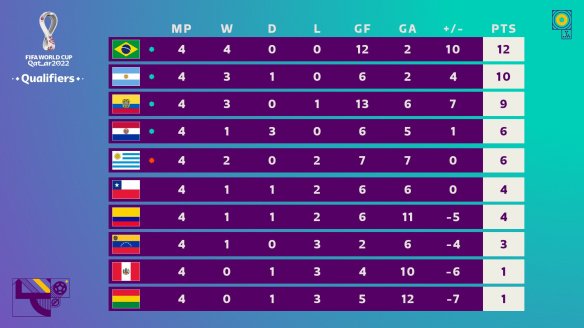 South America has wrapped up the first four rounds of qualifying (out of 18) for the FIFA World Cup in Qatar in 2022.